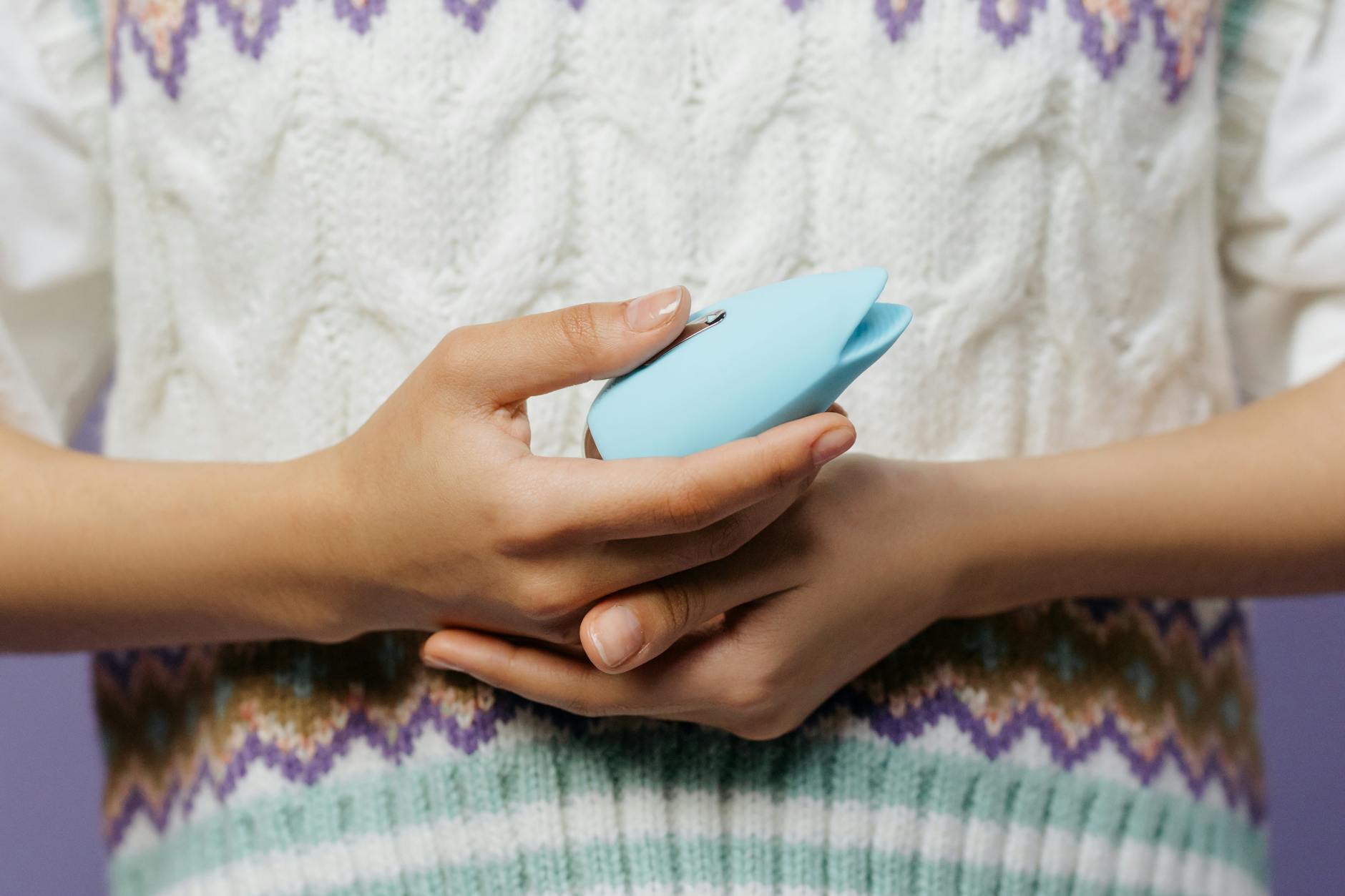
How to Use Lemon Vibrators When You Want to Explore New Sensation Patterns
Here's what happens to most of us. You find something that works, and then you keep doing it. The same pattern, the same rhythm, the same pressure. It gets the job done. But somewhere around the third or fourth time in a row, it stops feeling like discovery and starts feeling like habit.
That's not a problem with your body. That's a sign you're ready to explore.
One of the best things about lemon vibrators is that they're built for this exact moment. They're precise enough that you can actually map different sensations, test different patterns, and figure out what your body responds to under different conditions. You're not just experiencing pleasure. You're getting information.
Why sensation mapping matters more than you think
Let's get real. Most of us were never taught to explore our own bodies systematically. We stumbled onto what worked and stuck with it. Which is fine until it's not, because bodies change, stress shifts, hormones move around, and sometimes the thing that worked five years ago just doesn't land the same way anymore.
Sensation mapping is the practice of intentionally trying different stimulation patterns, speeds, pressures, and locations to figure out what actually feels good right now. Not what felt good last year. Not what a partner says should feel good. Not what you think you're supposed to enjoy. What actually works.
When you use a lemon clitoral vibrator for exploration rather than just orgasm-chasing, something shifts. You're not trying to reach a destination. You're paying attention to the journey. And that changes everything about what you discover.
Starting with a baseline pattern
Before you experiment, you need a reference point. This is the sensation you know works. For most people, this is medium speed, steady rhythm, direct clitoral contact. Get comfortable. Spend five minutes with the lemon vibrator at a consistent pattern that you know feels good. Notice how your body responds. Does the sensation stay the same, or does it build? Do you need adjustment, or can you stay with it?
This isn't about reaching orgasm. This is about understanding your baseline. Take notes, mentally or on paper. "Lem on pattern 3, medium pressure, feels best when I adjust slightly after three minutes" or whatever is true for you. That information is gold because it becomes your comparison point.
The pressure variation experiment
Once you know your baseline, change one variable. Keep the pattern the same, keep the speed the same, but change the pressure. Start lighter. Let the lemon vibrator sit against your clitoris without pressing. Notice the difference. Most people find that lighter pressure feels more like sensation than stimulus. It's a different kind of pleasure. Some bodies love it. Some don't.
Then press firmer. Use the weight of your hand to add pressure. Again, notice. Firmer pressure often feels more intense, more grounded. Sometimes it can feel slightly numbing if you stay too long, which is information too.
Try medium pressure again after exploring both extremes. You'll have a new appreciation for where the middle actually sits for you.
The speed and pattern experiment
This is where a lot of exploration gets interesting. Most lemon vibrators have multiple patterns. Steady pulse, waves, quick pulses, variations. Most people ignore all of them and stick with steady. Try each pattern for at least two minutes. Your body needs time to understand what it's experiencing.
You might find that a pattern you thought felt weird actually feels incredible when you pair it with a specific pressure or location. You might find that the fastest pattern feels exhausting but the medium feels perfect. You might discover that you actually prefer variation to consistency, which changes how you think about pleasure entirely.
Keep going through the patterns. The one that seems most boring might become your favorite when you give it real attention.
Location mapping on the vulva
Here's something most people never experiment with because we assume stimulation should feel basically the same everywhere. It doesn't. The clitoris isn't just the visible external part. The internal structure is three to four inches deep and branches extensively. Your body responds differently depending on where on the vulva the lemon vibrator is making contact.
Try the tip of your clitoris directly. Then slightly off to one side. Then the shaft of the clitoris, which is lower and slightly less sensitive for many people. Try the area above the clitoris. Some people find that indirect stimulation, where the vibrator is stimulating the area around rather than directly on the clitoris, feels less intense and more sustainable.
You're not looking for the "right" place. You're looking for the variety of sensations available to you. Different locations might be better for different moods, different times of your cycle, different paces.
The duration variable
Most of us think of using a vibrator as a fixed event. You have sex or you masturbate. It lasts a certain amount of time and then you're done. But what if you experimented with duration as a variable? What if you spent ten minutes on low speed instead of three minutes on high? What if you used your lemon clitoral vibrator for fifteen minutes in the morning, just for sensation, with zero expectation of orgasm?
Duration changes everything about how your body responds. Shorter, intense sessions feel different from longer, gentler explorations. Some people discover that they prefer building slowly over twenty minutes to the quick intensity of five. Others find that quick is actually what works for them, and longer sessions just get numb.
The point is you don't know until you test it.
Building a sensation toolkit
After you've experimented with these variables, you'll have discovered your personal sensation spectrum. Maybe it looks like this: light pressure on the shaft feels meditative, firm pressure on the tip feels energizing, the wave pattern feels weird for five minutes then incredible, and you prefer fifteen-minute sessions to five-minute ones.
Write this down. Seriously. Not in a clinical way. Just whatever helps you remember. "Lemon on wave pattern, light touch, takes me to a different place than my usual rhythm." That information lets you make intentional choices instead of falling into habit.
Then use that toolkit. Maybe you use your usual pattern when you want quick satisfaction. Maybe you use the wave pattern when you want something different. Maybe you explore a new variable every week. You've got options now instead of just one groove.
The brain component nobody mentions
Here's something that shifts when you start exploring systematically. Your brain gets involved differently. When you're sensation-mapping, you're paying attention in a way that's almost meditative. You're noticing rather than chasing. And that changes what happens physiologically.
When your brain is engaged in exploration rather than performance, arousal actually builds differently. Some people find they're able to experience multiple sensations in one session rather than moving toward a single goal. Some discover that the exploration itself is the pleasure, not just the destination. Some realize they actually like the process of mapping more than the orgasm.
That's data too. And it matters.
When to bring a partner into your exploration
If you're partnered, there are two ways to approach this. You can explore solo first, figure out what patterns work, and then share that information with a partner who can help recreate them. Or you can explore together, which has the advantage of turning sensation mapping into an intimate experience rather than a solo project.
If you go the solo route first, you'll have more clarity and less pressure to perform or explain. If you explore together, you'll often discover things you wouldn't alone, because having another person present changes the dynamic in interesting ways. There's no wrong choice. It depends on what you want from the experience.
You can also approach this totally differently. Use lemon vibrators when you want solo pleasure but have a partner at home to explore privately and come back to your partnership with new information about what works for you.
Managing numbness while exploring
One thing that happens sometimes during exploration is that you'll hit a wall where sensation just stops registering. This isn't failure. This is your nervous system telling you it needs a break. When this happens, stop. Take ten or fifteen minutes. Do something else. Drink water. Your sensitivity will come back.
If you're exploring regularly, it helps to vary which body part gets the most stimulation on different days. Spend one session focused on the tip of the clitoris, another on the shaft, another on indirect stimulation. This spreads the neural load and keeps sensation fresh across different areas.
This connects to something I write about in how to use lemon vibrators when your clitoris feels numb from overuse. It's the same principle. Rotation works.
The unexpected benefit of exploration
When you start intentionally exploring sensation patterns instead of just reaching for your usual rhythm, something shifts in your relationship to your own pleasure. You stop treating it like a task or a habit. You start treating it like something worth understanding. And that changes everything.
You also build resilience into your pleasure life. Because when one pattern stops working (and it will eventually, bodies are weird like that), you've got five others in your toolkit. You're not stuck in one groove. You've got options.
Start with one variable. Change pressure while keeping everything else the same. Spend a few sessions on that. Then pick a new variable. This isn't about doing everything at once. It's about building actual knowledge about your body through intentional, methodical exploration.
Frequently Asked Questions
What's the difference between sensation mapping and just regular masturbation?
Regular masturbation is usually goal-oriented. You're aiming for a specific outcome, usually orgasm. Sensation mapping is process-oriented. You're paying attention to sensation itself, without necessarily expecting a particular ending. Both are valid. But they use different parts of your brain and body.
How long does it take to figure out your sensation patterns?
There's no timeline. Some people discover preferences in two or three sessions. Some take weeks. What matters is that you're intentional, not that you're fast. The goal is understanding, not rushing through the process.
Is it weird to take notes on what sensations work?
Not at all. Taking notes actually deepens your understanding. Your memory isn't reliable for this kind of information, and writing things down forces you to be specific. "Light feels good" is less useful than "light pressure on the shaft for ten minutes, then medium pressure on the tip." Specificity helps you recreate experiences and discover patterns.
Can you do sensation mapping with a partner?
Absolutely. It can actually be more interesting with a partner because you get feedback in real time. "That pattern feels different when you apply it" is useful information. Just make sure you're exploring together consensually and communicating throughout.
What if you discover you like something you didn't expect?
That's the whole point. Your body might respond to a pattern or pressure or location that doesn't match what you thought you'd like. That's not weird. That's useful. That's the information you were looking for. Integrate it into what you know about yourself and keep going.
Does sensation mapping work better with some toys than others?
Lemon clitoral vibrators are particularly good for this because they offer multiple patterns and are precise enough that you can really control what's happening. But honestly, any vibrator works if you're intentional about varying one thing at a time. The tool matters less than the approach.
The real point
Sensation mapping isn't complicated. It's just deliberate exploration instead of habit. It's using your lemon vibrator to ask questions about your body rather than just reaching for the answer you already know. And when you do that, something shifts. You're not just experiencing pleasure. You're understanding it. And that knowledge, that toolkit of patterns and preferences, becomes part of how you take care of yourself for the rest of your life.
If you want to dive deeper into how to use vibrators intentionally across different situations and needs, our buying guide walks through options that work for different exploration styles and body types.
Your pleasure is worth understanding. Start exploring.