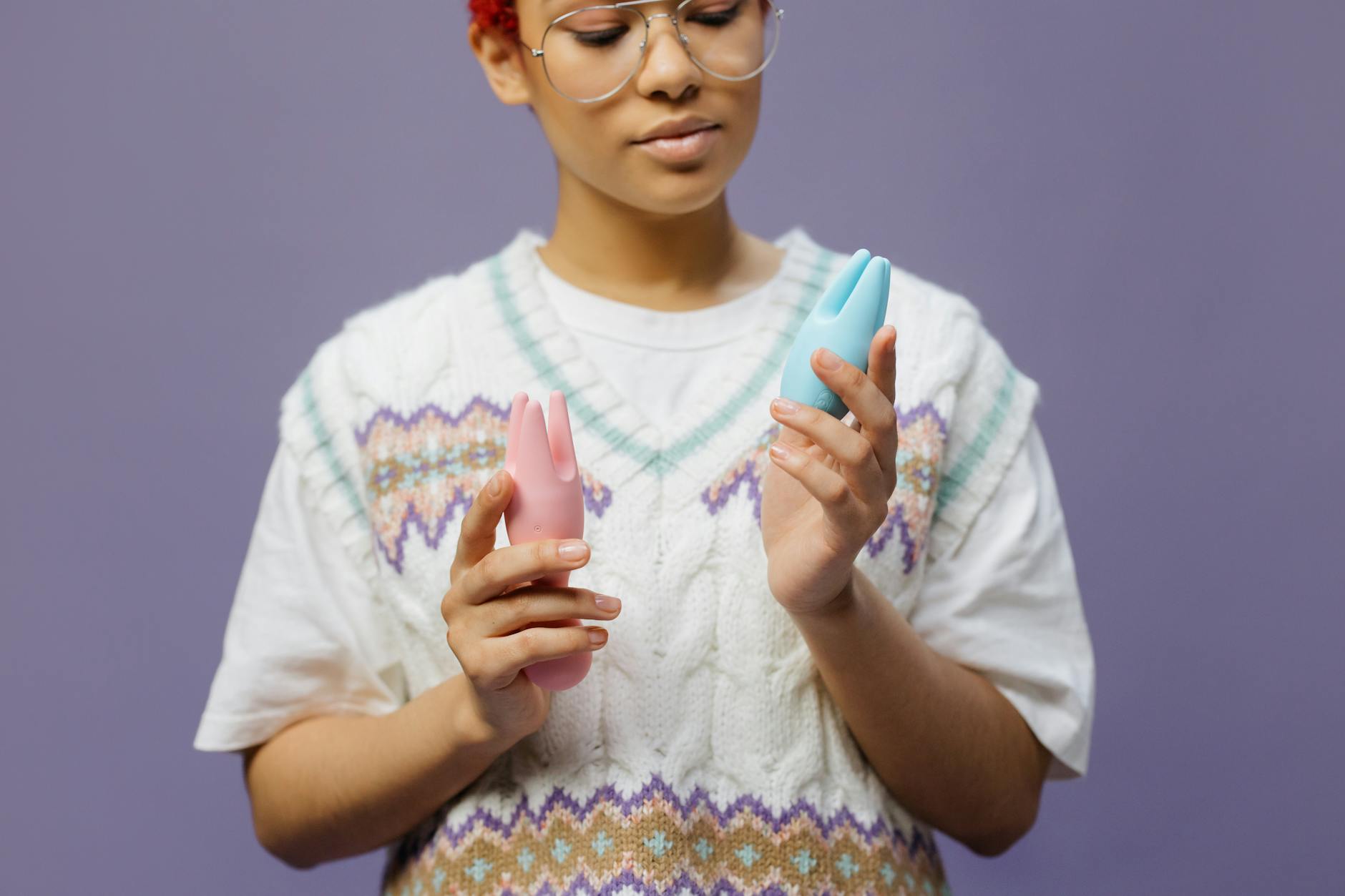
How to Use Lemon Vibrators When You Want Solo Pleasure But Have a Partner at Home
Let's be real. Moving in with a partner changes everything about how you access pleasure, and not always in the way couples' books suggest. You lose a fundamental thing: uninterrupted solitude. No locked bedroom door and two hours to yourself. No shower time that's actually yours. No early morning or late night where the house is quiet and you can explore what you want without negotiating anyone else's schedule or needs.
Solo pleasure doesn't stop when you couple up. It just gets complicated. And if you're someone who uses a clitoral vibrator like a Lemon to explore your own body, that complication gets real fast. The question isn't whether you should have solo pleasure when you're partnered. It's how.
Why solo pleasure still matters in a relationship
Here's the thing that couples therapy often skips over. Solo pleasure and partnered pleasure are two different conversations happening in two different parts of your brain. Solo pleasure is about you learning what your body wants. It's self-knowledge. It's a conversation between you and your own nervous system, without an audience or a performance obligation.
When a partner is in the house, that changes the entire texture of the experience. Even if they're in another room, there's a cognitive load. Are they going to interrupt? Do they know what you're doing? Will they feel hurt or excluded if they find out? That mental load itself is pleasure-killing.
I work with couples constantly where one partner has stopped exploring solo pleasure because the guilt or the logistics feel impossible. And the downstream consequence is almost always the same. Their partnered sex gets smaller, more mechanical, less inventive. They're not bringing curiosity into the bedroom anymore because they've outsourced their entire pleasure education to someone else.
Solo exploration with a tool like a lemon vibrator isn't selfish. It's the foundation that makes partnered pleasure possible.
Setting up the practical logistics
Okay, so you need time. Real time. Not stolen bathroom minutes. Not a quickie while they're in the shower.
The first move is to claim a block on your calendar and actually tell your partner. Not to announce "I'm masturbating now," but to establish a boundary. "I need an hour on Tuesday and Thursday evenings to myself. That's non-negotiable." If they ask why, the honest answer is "I need solo time to reconnect with myself." That's true and it's not a lie, even if part of that reconnection involves a clitoral vibrator.
Most partners who freak out about this are worried about one of three things. One. That you're unhappy with them sexually. Two. That solo pleasure is a rejection of them. Three. That you're sneaking around. You can address all three by being straightforward: "This isn't about you. It's about me understanding my own body better. That actually makes things better between us."
Some partners will surprise you. They'll be relieved. They'll appreciate that you're not putting all your pleasure expectations on them.
Logistically, where does this time happen? Your bedroom ideally, with a lock on the door. If that's not possible, a bathroom. I've worked with people in shared apartments who use a white noise machine and a closed door to create the illusion of privacy. Not ideal, but workable.
The lemon vibrator itself is small and discrete. It's not a wand that's obviously a toy. It fits in a nightstand drawer under a book. Most people won't know what it is unless they already know what it is.
Choosing the right moment
Timing matters more than most people acknowledge. If your partner works late, that's your window. If they have a hobby they do on certain nights, use that. Early morning before they wake up is another option, though some people find it harder to relax knowing someone is still in the bed next to them.
Weekends are actually harder than weekdays for solo pleasure when you're living together. There's more presence, more expectation of joint time. Weekday mornings or evenings when routines are established and separate often work better.
If you share a bed and they sleep before you, you have options. A vibrator like the Lemon is quiet enough that slow exploration might not wake a light sleeper. But honestly, the mental distraction of someone sleeping three feet away is usually more of a barrier than the noise. You're better off using a time when they're genuinely elsewhere.
The conversation you might need to have
Sometimes they'll figure it out. You're gone on Tuesday nights. They ask. And suddenly you have to decide whether to lie or be honest.
Honesty is better. It sounds like this.
"I've been using time alone to explore my own pleasure. I use a vibrator. It helps me understand what I want. It's not about you or us. It's about me. And actually, understanding my own pleasure better makes me happier and probably makes our sex life better too."
If they respond with hurt or anger, that's something to work through together. Sometimes that hurt is about feeling excluded. Sometimes it's insecurity. Sometimes it's rooted in ideas about what solo pleasure "means" in a relationship. None of that goes away if you hide it. It just festers.
I recommend couples therapy isn't just for crisis. It's for getting on the same page about things like this before they become a wedge. A therapist can help both of you separate "my partner is exploring their body" from "my partner doesn't want me."
What solo pleasure looks like in practice
You have your hour. You're locked in the bedroom. Now what?
Don't rush into using the toy. Use the first 10 or 15 minutes to actually settle your nervous system. You might have been answering emails or thinking about the grocery list moments before. Your body needs time to downshift.
Arouse yourself without the vibrator first. Read something that turns you on. Watch something. Think about something. Let your body warm up. This isn't about jumping straight to orgasm. It's about learning what builds desire in you when there's zero performance pressure.
When you bring a lemon vibrator in, start slow. The Lemon works differently than a traditional vibrator. It uses suction and patterns rather than just buzzing. Explore what patterns feel good. What intensity. What rhythm. Notice where your mind goes. What fantasies do you have when you're alone that feel different from partnered sex?
You might orgasm. You might not. Both are fine. The point is you're collecting information about yourself.
The pleasure gap between solo and partnered
Here's something that surprises a lot of people. Solo pleasure often feels easier and more intense than partnered pleasure, especially for people with clitorises. There are a few reasons.
One. You know your own body. Your partner is still learning. Two. There's no performance pressure when it's just you. Your nervous system is more relaxed. Three. You can take as long as you want. No one's getting tired. No one's waiting for you to finish.
When you bring that knowledge back into partnered sex, it changes things. You can show your partner what you like. You can say "slower" or "that pattern" or "just like that." You're not starting from zero.
Some people worry that using a vibrator solo will make partnered sex feel less intense. That's sometimes true in the short term. But over time, the solution is usually that your partner learns how to bring the same kind of stimulation you've learned to give yourself. How Lemon Vibrators Help When Pleasure Feels Rushed With a Partner explores this in more depth.
Building boundaries that feel solid
The boundary isn't just about claiming time. It's about making it real in your mind too. This is your time. Not stolen time. Not guilty time. Time you deserve.
Some partners will test the boundary. They'll knock on the door. They'll need something "quick." They'll say they feel left out. You have to hold the line. Not with anger, but with clarity. "I'm taking this time for myself. I'll be out in 30 minutes." Then actually be out in 30 minutes.
If the boundary constantly gets violated, that's a bigger conversation about respect and partnership that might need professional help.
For some couples, the boundary actually becomes sexier. There's something about restriction and desire. They know they can't have access to you during that time, so there's more anticipation. Sometimes that hour leads to better partnered sex later.
Solo pleasure in a shared space is a logistics problem with an emotional layer. The logistics are solvable. The emotional piece requires honesty and sometimes outside help.
When to seek support
If your partner is consistently upset about solo pleasure, that's worth exploring with a couples therapist. Not because you're doing anything wrong, but because you're in a relationship where one core need (self-knowledge, bodily autonomy) is being blocked.
Similarly, if you're feeling massive guilt about solo pleasure, that might be worth unpacking too. Pleasure isn't a zero-sum game. You having orgasms alone doesn't subtract from the partnership.
A therapist trained in sex-positive work can help you both see solo pleasure as part of a healthy sex life, not a threat to it.
FAQ
Is it cheating if I have solo pleasure while in a relationship?
No. Solo pleasure is about you and your own body. Cheating involves another person. These are completely different things. Many couples find that explicitly supporting each other's solo pleasure actually strengthens the relationship.
Should I tell my partner I use a lemon vibrator?
That depends on your relationship. If you share a bedroom, they'll probably figure it out at some point. I'd recommend being upfront rather than having them discover it and feel hurt or excluded. Start with the boundary conversation, not the vibrator conversation. "I want solo time" is often easier to hear than "I want solo time with a toy."
What if my partner wants to join?
That's a choice you get to make. Solo pleasure and partnered exploration are different. You don't have to combine them. You can say "I value this as my private time" and still explore toys together at a different time. Or you might want to bring them in sometimes. It's your call.
Can a clitoral vibrator like the Lemon help me understand what I want in partnered sex?
Absolutely. Solo exploration is how most people learn their own pleasure. When you know what patterns and intensity feel best for you, you can communicate that to a partner. That's actually one of the biggest gifts solo pleasure can offer a relationship.
What if I feel guilty about wanting solo pleasure?
That guilt often comes from old messaging that says your body is supposed to exist for someone else. It's not. You deserve to know your own pleasure. Sometimes talking to a therapist or reading books about sex positivity helps shake that guilt. But the short version is. Your body is yours.
How do I bring what I learn from solo pleasure into partnered sex?
Communication. Show your partner what feels good. Guide their hands or mouth. Use the vibrator together sometimes. Or talk about what you've learned. "I realized I like slower patterns" or "My pleasure builds faster than I thought." That information helps both of you.
Solo pleasure when you're partnered isn't a secret or something to be ashamed of. It's self-knowledge. It's the conversation you have with your own body about what brings it alive. And that conversation, in turn, makes you a better partner. You know what you want. You can communicate it. You're not expecting someone else to guess your pleasure or carry all the responsibility for your satisfaction.
A lemon vibrator is a tool for that self-knowledge. It's discrete, quiet, and designed to help you learn your own pleasure patterns. Using it in a shared space requires boundaries and sometimes conversation. But it's absolutely possible, and worth it.
If you're struggling with the logistics or the emotional piece of solo pleasure in a coupled relationship, that's what the contact form is for. You don't have to figure this out alone.