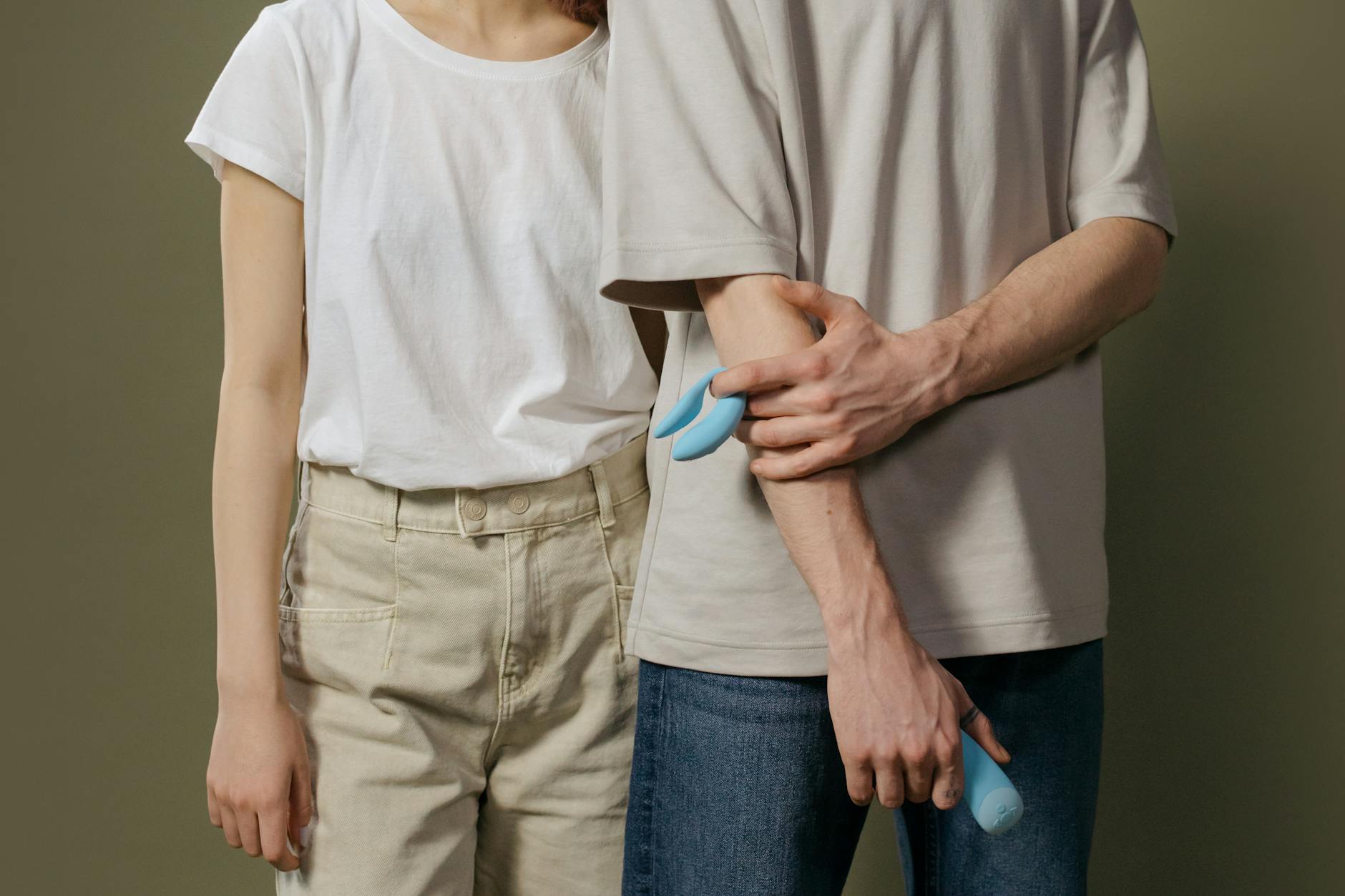
Let's talk about what nobody tells you
Your body is incredible right now. It also feels absolutely nothing like it did six weeks, three months, or even a year ago. And here's the thing nobody mentions in those postpartum guides: pleasure matters as much as healing does. They're not separate conversations.
If you're thinking about bringing lemon vibrators back into your intimate life after childbirth, you're not jumping the gun. You're being intentional about rebuilding connection with your body and your partner. This guide walks you through the actual timeline, what your pelvic floor needs, and how to use clitoral vibrators safely as you recover.
The actual healing timeline (what doctors don't explain clearly)
Your OB probably said "six weeks before penetration." That's the baseline for vaginal tissue to close up. What they didn't say is that six weeks is not the same as "healed." Pelvic floor muscles are still reorganizing. Hormones are still shifting, especially if you're breastfeeding. Scar tissue, if present, is still settling.
Here's what the timeline actually looks like: Weeks 1-4 are about not moving much. Weeks 4-8, your pelvic floor is still quite swollen even though it looks "closed." Weeks 8-12, the real work of rebuilding strength begins. By 12 weeks, if you've had vaginal delivery without tearing or episiotomy, clitoral stimulation is usually safe.
If you had a cesarean, you're healing from abdominal surgery on top of hormonal upheaval. That's a different recovery arc. Eight to twelve weeks before introducing any stimulation, and even then, gentle.
If you had tearing or an episiotomy, ask your pelvic floor PT directly. They'll know whether your scar tissue is ready. Don't guess.
The key: clitoral vibrators like the Lem work differently from penetration because they avoid the vaginal opening and any areas that might still be tender. That matters.
Why lemon clitoral vibrators are safer than other toys postpartum
Most vibrators create friction. They require you to move them, position them, apply pressure. After childbirth, your pelvic floor is already working overtime just keeping you continent and upright.
Lemon vibrators use suction-based stimulation instead. No friction. No penetration required. No pressure against healing tissue.
What that means practically: You lie still. The vibrator does the work. Your pelvic floor doesn't have to engage or contract defensively. The suction gently stimulates the clitoris and surrounding nerve endings without any of the mechanical stress that comes with traditional vibrators.
For postpartum bodies, that's huge. Your nervous system has been through trauma, even if delivery went smoothly. Lemon vibrators let pleasure happen without your body needing to "perform" or maintain tension.
Starting small: your first postpartum session
First rule: If it hurts, stop. Discomfort is information. Ignore anyone who tells you otherwise.
Wait until you've had clearance from your provider. Then wait another two weeks past that. Seriously. Your nervous system needs the permission, not just the medical clearance.
When you do start, set aside time when you're not touched out. If you have a newborn, this might mean waiting until your partner is handling a feed or your baby is napping. You need to feel like your body is actually yours for a moment.
Start at the lowest intensity setting. If you have the Lem, that's setting 1. Spend a few minutes just noticing what the sensation feels like. Your body might feel numb in places. That's normal. Postpartum hormones dull sensation everywhere, not just the vulva.
Give yourself permission to feel nothing, or very little. Pleasure is not the goal. Reconnection is. If something happens, great. If not, that's fine too.
Managing pelvic floor tension during postpartum recovery
Here's what happens to many people: They try to use a lemon vibrator postpartum, and their pelvic floor clamps down immediately. It feels tight, defensive, almost protective.
That's not a reason to stop. It's information about where you are.
Your pelvic floor just went through something intense. Even if labor was short, even if it was straightforward, the muscles experienced pressure and stretching that they'd never experienced before. They're cautious now. That caution is protective, but it can get stuck.
Before you use any vibrator, spend five minutes just breathing and relaxing your pelvic floor. Here's how: Breathe in through your nose for four counts. On the exhale, imagine your pelvic floor softening like a flower opening. Let your buttocks be heavy. Let your lower belly drop.
Do this three to five times. Then, when you use the lemon vibrator, keep checking in. If you feel tightness, pause. Breathe. Let it soften.
Over time, your pelvic floor learns that pleasure is safe again. That sensation doesn't mean pain. That openness doesn't mean danger.
Natural lubrication shifts postpartum (and when to use lube)
Your estrogen is lower right now, especially if breastfeeding. That means less natural lubrication everywhere, even though you're using a clitoral vibrator, not penetrating.
Your skin is drier. The vulva is less plump. That might make the suction feel intense or uncomfortable. It's not that lemon vibrators are wrong for your postpartum body. It's that your skin needs support.
Water-based lubricant is your friend. Not because you're broken, but because it restores what your hormonal situation temporarily removed. A few drops around the clitoris before you start makes most postpartum bodies feel much more comfortable.
If you're breastfeeding and trying to track when sensation might return to normal, this is also worth knowing: Sensation usually improves as you introduce other foods alongside breastfeeding, and dramatically improves once you've weaned. It's not a reason not to breastfeed. It's just a timeline.
When your partner wants to help (and how to communicate)
Many postpartum people feel touched out. Your partner might feel disconnected. Both things can be true.
If your partner is hoping to be part of your postpartum intimacy recovery, the clearest path is conversation first, action second. Something like: "I want to rebuild this with you. Right now, what feels safe to me is..."
That might be: using a lemon vibrator together while you're still mostly clothed. Your partner holding your hand while you use it on yourself. Your partner using it on you while you stay in control of the speed. All of these are valid starting points.
The thing partners often don't understand: postpartum intimacy is not about performance. It's about proving to yourself that pleasure is still possible, and that your body is still yours. Rushing that defeats the whole point.
Building back to full sensation
There's this weird thing that happens: After childbirth, sometimes sensation takes months to fully return. It's not permanent. It's just part of the healing process.
Meanwhile, you might feel impatient with yourself. That's normal. Also not helpful. Here's what actually works: Consistent, gentle stimulation over time helps your nervous system remember what pleasure feels like.
Using a lemon vibrator twice a week, even for ten minutes, teaches your body that sensation is coming back. It's like physical therapy for pleasure. Your nervous system gets the signal: "This is safe. This feels good. More of this."
Over weeks, you'll notice sensation sharpening. Orgasms becoming more possible. Arousal building faster. This is your body recalibrating, not you doing something wrong.
FAQ
Can I use a lemon vibrator if I'm still bleeding postpartum?
No. Wait until postpartum bleeding has stopped completely. Your cervix is still open, and introducing any device into that environment risks infection. That means waiting at least until your bleeding is minimal, ideally until it's stopped for a few days.
What if I had a cesarean section? Is it different?
Yes, a bit. You're healing from abdominal surgery plus hormonal shifts. Wait the full 8-12 weeks before using any vibrator, and when you do, start even gentler than you would with vaginal delivery. Your nervous system is processing more trauma. Give it time.
Is it normal to feel numbness when using lemon vibrators postpartum?
Completely normal. Postpartum hormone changes (especially low estrogen) reduce sensation everywhere on your body, not just sexually. Your clitoris might feel distant or dull. That doesn't mean you're broken. It means your hormones are still resetting. Sensation returns gradually, usually within 3-6 months, faster once breastfeeding stops if applicable.
My pelvic floor clenches whenever I try to use a vibrator. What's wrong?
Nothing is wrong. Your body is protecting itself. Spend time breathing and relaxing your pelvic floor before and during use. Do pelvic floor stretches, not just strengthening exercises. Consider working with a pelvic floor physical therapist who can assess whether tension is the main issue. Sometimes it is, and it's very fixable.
Can I use lemon vibrators if I'm breastfeeding?
Yes. The hormonal shifts from breastfeeding might make sensation feel duller, and lubrication might be lower, but using a lemon clitoral vibrator is safe. Just use water-based lubricant to make it comfortable. Your sensation will return as your hormones stabilize.
What intensity should I use on a lemon vibrator postpartum?
Start at setting 1. Your nervous system is sensitive right now. What feels powerful in six months might feel overwhelming now. Most postpartum people find they can work up to settings 2-3 within a few weeks, but there's zero rush. Let your body tell you what it's ready for.
Your body is healing. Pleasure is part of that.
Postpartum recovery is not one thing. It's a thousand small reintegrations: becoming your own person again, becoming a parent, becoming a partner again, becoming someone who experiences pleasure again.
Lemon vibrators won't speed up that timeline. But they can make the journey feel less lonely. They remind you that your body is still capable of sensation and joy, even in the middle of the hardest transition of your life.
Start when you're ready, not when you think you should be ready. Go slow. Listen to what feels true. Your pelvic floor will thank you, and so will the rest of you.
If you want to explore this with a partner, start with conversation. If you want to do this alone first, that's equally valid. There's no wrong answer here, only the answer that feels right for your body and your life right now.
Your pleasure matters. Your recovery matters. They're the same conversation.