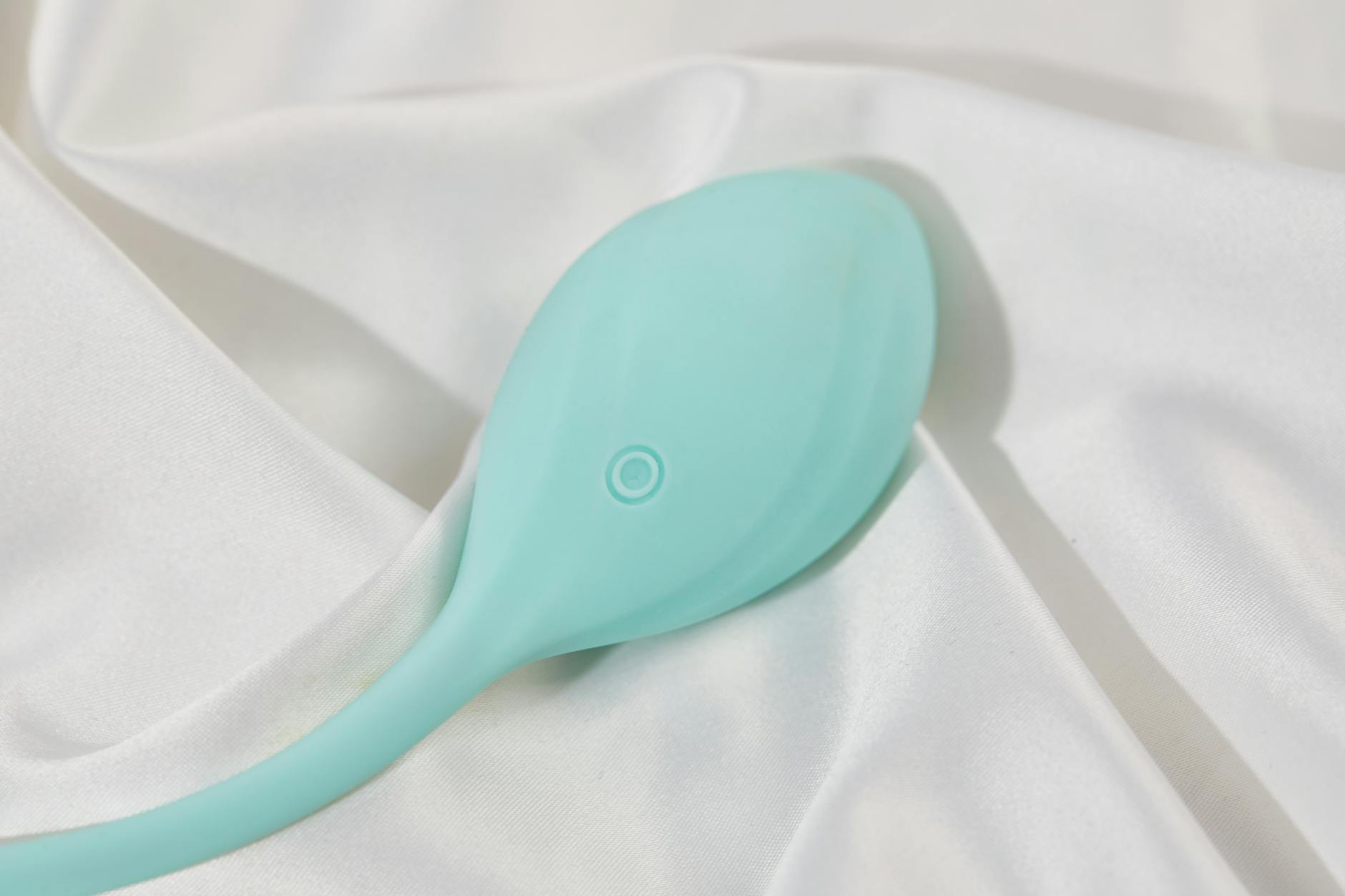
Your hormones are literally rewiring sensation every phase
Here's what nobody tells you: your menstrual cycle doesn't just affect mood or energy. It rewires how your nervous system responds to pleasure. That means a lemon vibrator setting that feels transcendent on day 14 might feel uncomfortable on day 3. This isn't a flaw in how you're using it. It's neurobiology.
I've worked with hundreds of people navigating this, and the pattern is consistent. Once you map your cycle against sensation, you stop forcing the same experience every day and start working with your body instead of against it.
Menstruation phase: what actually happens physiologically
During your period (days 1-5), estrogen is at its lowest point. Progesterone is also dropping. Your pelvic floor is often tighter, and blood flow to the genitals increases.
What this feels like: sensitivity is often heightened, but touch that usually feels good can feel overwhelming. The clitoral tissue is more engorged, which changes how vibration translates. Many people find that lower frequencies feel better than the high-speed intensity that works in other phases.
The practical shift: start lower on your lemon vibrator than you normally would. If you usually begin at intensity level 3 or 4, try level 1 or 2. You'll likely find that you can gradually increase through a session, but forcing the starting intensity often backfires.
Lubrication changes too. You might assume menstrual blood serves as lubrication, but it's chemically different from arousal fluid. Adding a water-based lubricant helps reduce friction-related discomfort and makes every sensation cleaner.
Follicular phase: the golden window for sensation
Days 6-13, your estrogen rises steadily. FSH (follicle-stimulating hormone) climbs. Your energy increases, your nervous system becomes more responsive, and genital blood flow actually improves.
What this feels like: this is often when people report their most satisfying experiences. Arousal builds faster. The clitoris is less engorged than during menstruation, which means vibration feels sharper and more defined rather than diffuse. Sensitivity is high without being raw.
The practical shift: this is when you can confidently use higher intensities on your lemon vibrator. If you've been experimenting with patterns or settings you weren't sure about, this is the phase to explore them. Your body is primed to respond, which means you'll get clearer feedback about what actually works for you.
Many people also find that orgasms come faster in this phase. That's not laziness or decreased pleasure. It's neurochemistry. The brain's reward pathways are more easily activated by dopamine surges. Some people use this to their advantage by trying new approaches or positions they've been curious about.
Ovulation: the intensity peak
Days 12-16, with ovulation typically around day 14, something shifts dramatically. Testosterone spikes. Estrogen hits its highest point just before ovulation, then dips sharply as ovulation happens. Blood flow to the genitals increases further.
What this feels like: desire is often at its peak. Clitoral sensitivity is heightened. Some people report that orgasms are deeper and more full-bodied during this window. Physical sensations that felt subtle in other phases suddenly feel vivid.
The practical shift: this is when intensity cranks up naturally. You might find yourself gravitating toward higher settings on your lemon clitoral vibrator without conscious effort. That's not unusual. Your body is literally primed for more stimulation.
One important note: if you're tracking ovulation for any reason, this is also when you're most fertile. That detail doesn't affect how you use pleasure tools, but it's useful context if contraception is a factor in your decision-making.
Luteal phase, early: still responsive
Days 17-21, progesterone starts rising significantly. Estrogen is moderately elevated. Your energy might start to shift, but you're not yet in the heavy luteal phase.
What this feels like: you're still responsive, though not quite at ovulation intensity. Arousal is accessible. Some people find that they need slightly more time to warm up than in the follicular phase, but the experience is still straightforward.
The practical shift: you can generally use the same settings that worked in the follicular phase. If you're tracking week-to-week what feels good, early luteal usually mirrors late follicular pretty closely.
Luteal phase, late: the recalibration
Days 22-28, progesterone is high and rising. Estrogen drops. PMS symptoms often appear. Your nervous system is more reactive to stress, and you might feel more introspective or withdrawn.
What this feels like: sensitivity often changes. Some people find that sensations feel muted or disconnected. Others find that physical intensity helps them push through emotional weight and actually feel something clarifying. There's no universal experience here, which is exactly why tracking matters.
The practical shift: lower intensities often work better, but not always. The key shift is usually in pacing. Where you could dive straight into moderate intensity in follicular phase, late luteal often benefits from longer warm-up. Start lower, move slower, and check in with yourself about what's actually landing.
Some people skip pleasure exploration entirely in this phase, which is completely valid. Others find it deeply grounding. The goal isn't to perform consistent pleasure across your cycle. It's to honor what your body actually needs.
How to track what works for each phase
Spot-check one thing at a time. Note the setting you started with, how long warm-up took, and how the experience felt. After two or three cycles, patterns emerge. You'll notice that what felt weird on day 23 makes total sense when you cross-reference the calendar.
Keep it simple. You don't need an app or a spreadsheet. A quick note in your calendar ("lem intensity 2 felt great" or "started at 3, needed 4 by end") gives you data without turning pleasure into a laboratory exercise.
Why this matters for your lemon vibrator specifically
Lemon clitoral vibrators work through suction and vibration, which means they engage slightly different nerve pathways than direct vibration alone. This actually makes them incredibly useful across cycle phases because you can vary the suction level, the vibration intensity, and your proximity to the toy.
If direct vibration feels too sharp in late luteal, pulling back on the suction intensity or positioning slightly differently can shift the sensation completely. You're not limited to on-or-off. You have granular control.
The partner conversation, if that's relevant
If you're exploring with a partner, the cycle reality matters. Your body's responsiveness genuinely changes. That's not a reflection on them or on the relationship. It's endocrinology.
The conversation gets a lot easier when you separate "my body is responding differently" from "I want something different from you." One is temporal and predictable. The other is relational. Confusing them turns both conversations into dead ends.
FAQ
Can you use a lemon vibrator during your period?
Yes, but with adjustments. Start at lower intensities than you'd normally use. Menstrual blood is more acidic than arousal fluid, so adding water-based lube helps. Many people find that suction-based stimulation feels better during menstruation than high-speed vibration, which makes a lemon clitoral vibrator particularly useful in this phase.
Does hormonal birth control change how lemon vibrators feel?
Yes. Hormonal contraception stabilizes your hormone levels, which means the cycle fluctuations described here flatten out significantly. You'll likely find one consistent setting works across the month rather than needing to adjust. Your baseline sensitivity might also shift from what you experienced pre-contraception.
What if my cycle is irregular or I don't menstruate regularly?
Irregular cycles mean the pattern is less predictable, but the underlying physiology still shifts. You might track by how you actually feel rather than by calendar dates. When do you feel most aroused? Most sensitive? Most withdrawn? Those internal cues are just as valid as a calendar.
Can cycle tracking help me understand low desire?
Sometimes. If you notice that desire completely vanishes in late luteal phase, that's useful information. But if desire is consistently low across your entire cycle, that's a different conversation entirely and worth exploring with a healthcare provider or therapist. Cycle phase explains some variation. It doesn't explain everything.
Why do orgasms sometimes feel different at the same intensity?
Because you're literally not the same person neurochemically on day 14 versus day 3. Hormone levels affect not just physical sensation but how your brain processes pleasure signals. The same input produces different output depending on your endocrine state. This is why "one setting fits all" never really works across a full cycle.
Should I adjust intensity or should I just push through when something feels off?
Adjust. Pushing through muted sensation or oversensitivity trains your nervous system to override your actual experience. That's the opposite of what you want. The goal is to learn to listen to what your body's telling you, then respond intelligently.