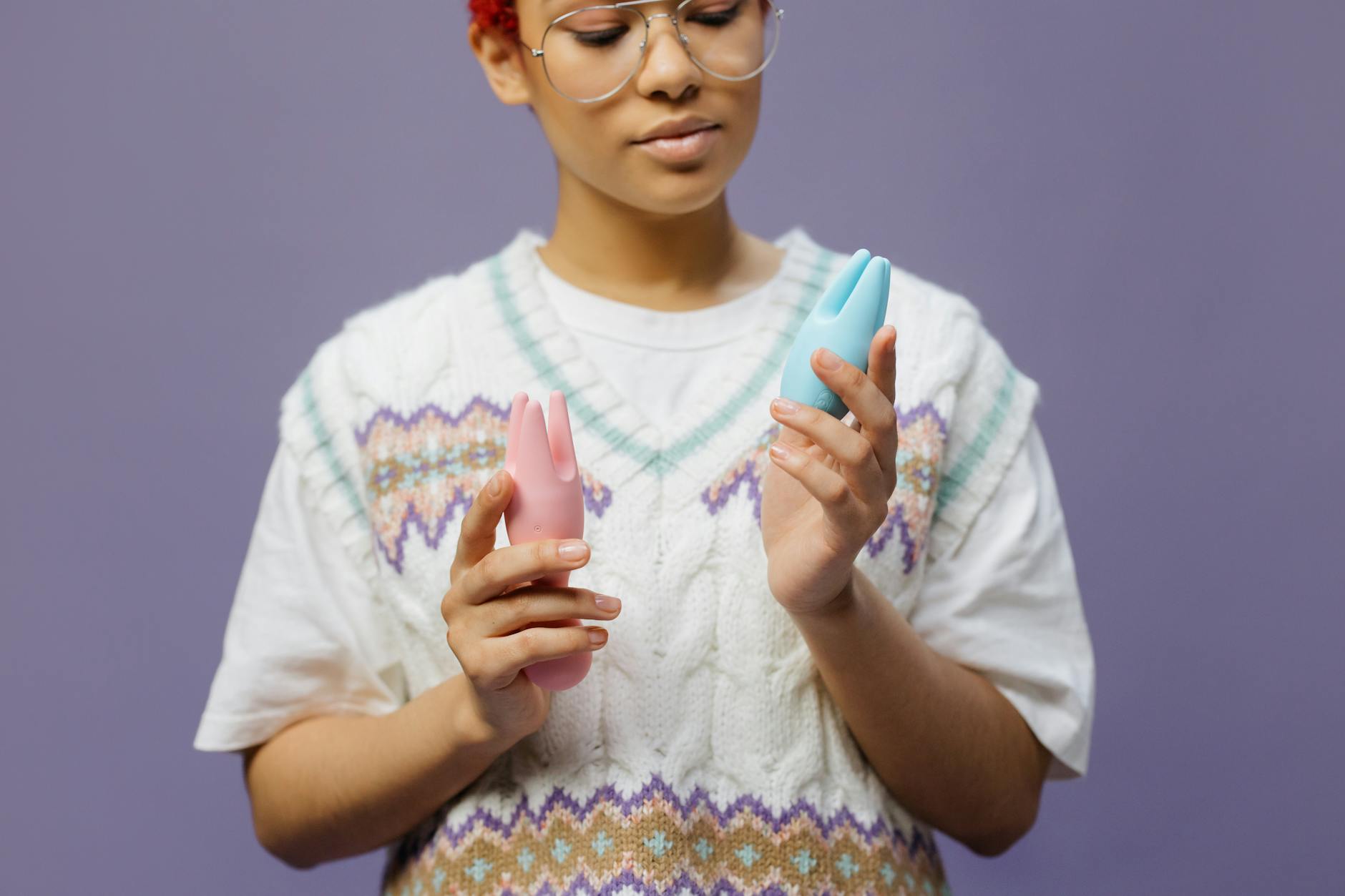
How to Use Lemon Vibrators With Partners Who Are Touch-Averse or Have Sensory Sensitivity
Honestly, touch aversion is one of the least talked about roadblocks in long-term relationships. One partner wants physical connection. The other experiences touch as overwhelming, uncomfortable, or even painful. It's not rejection. It's neurology. And it's treatable, but not by ignoring it.
Here's the thing: lemon vibrators, particularly air-suction clitoral vibrators like those from My Lemon Sexual Toys, can actually be the tool that transforms this dynamic. Not by forcing touch, but by creating a completely different experience.
What touch aversion actually means
Touch aversion isn't one thing. It can show up as sensory processing sensitivity (you feel everything too intensely), trauma response, autism spectrum traits, anxiety, skin conditions, hormonal fluctuations, or just years of burnout. The trigger doesn't matter for your purposes. What matters is that direct fingertip contact feels wrong.
The irony is that the person with aversion often wants intimacy and pleasure. They want to feel close to their partner. But the path to that pleasure is being blocked by the sensation itself.
Most couples respond by either (A) having no sex at all, or (B) pushing through and creating resentment. Neither works long-term.
Lemon clitoral vibrators sit in a third camp: they offer stimulation that bypasses the problem entirely.
Why lemon sexual toys work differently for sensitive partners
Air-suction technology (the foundation of lem vibrators) works through gentle, rhythmic suction rather than direct friction or vibration. For someone with sensory sensitivity, this changes everything.
Here's why:
1. The sensation is different. Suction creates a sealed stimulation pattern that feels more like a wave or pulse, not like a person touching you. That distance is crucial. It removes the vulnerability of direct contact while maintaining intensity.
2. The control is entirely with your partner. They hold the toy. They move it. They decide the pattern and intensity. For someone with aversion, this sense of agency is non-negotiable. Lemon vibrators put control where it needs to be.
3. No unpredictable touch. Direct manual stimulation can feel overwhelming because fingers have varying pressure, temperature, and timing. A lemon vibrator delivers consistent sensation. Consistency is often deeply grounding for people with sensory sensitivities.
4. It creates distance while maintaining closeness. Your partner isn't lying on you. They're beside you, in control of the experience, not triggering overwhelm. This is intimacy without the dysregulation.
How to introduce the idea without pressure
This is the part most couples get wrong. Bringing up a toy when someone has touch aversion can feel like you're pointing out the problem. You're not.
Frame it this way: "I want us to find a way to be close that works for your body. I've been thinking about lemon vibrators. Not because anything is wrong with you. Because they might make pleasure possible for both of us."
That's it. No elaborate pitch. No pressure. Just honesty.
If your partner says no immediately, ask why. Usually it's one of three things:
They think vibrators mean you don't want them. (You might need to repeat that you do want them.) They're worried about the sensation. (Let them hold it first, use it on their arm, understand what it does.) They feel shame about needing accommodation. (This one needs a longer conversation. Their shame is real, and it's worth taking seriously.)
Don't push. Coercion ruins everything. But offering options is your job as a partner.
Setting up the first experience together
When you're ready to try, do this:
Before you start anything. Talk about what comfort looks like. Can they stop you mid-experience? Yes, always. What patterns feel good? What feels like too much? What would make them feel safer? Have these conversations while clothes are on.
Start with exploration, not performance. The goal is not an orgasm. The goal is discovering what this feels like. Use a lemon clitoral vibrator on the lowest pattern first. Let your partner get used to the sensation without any pressure to "respond" or "enjoy it right now."
Your partner holds the toy. This is not negotiable. They decide when, where, how much pressure, and how long. You're present. You might touch other parts of their body (if that's okay). But the vibrator is theirs to control.
Create physical distance from everything else. Don't try this while lying pressed together. Sit slightly apart. Make eye contact if that feels okay. Some people with aversion need to see what's happening to stay regulated. Others need to close their eyes. Follow their lead.
Keep talking. "How does this feel?" "Do you want to try a different pattern?" "Are you comfortable?" Check-ins aren't killing the mood. They're building trust. And honestly, for someone with sensory sensitivity, that's the entire mood.
Building the experience over multiple sessions
Don't expect magic the first time. Sensory sensitivity rewires slowly. Some people find that after 3-4 experiences with a lemon vibrator, the novelty wears off and they can actually relax into pleasure. Others find that the control element is what creates the shift.
What you might notice:
Your partner starts asking for the vibrator. (Good sign.) They ask to use it solo first, then with you. (Also normal.) They become curious about different patterns. (They're exploring.) They can sustain pleasure for longer without shutting down. (This is progress.)
Don't measure success in orgasms. Measure it in: Did you stay regulated? Did you ask for what you needed? Did we feel closer after?
Managing your own feelings in this dynamic
Here's what I tell partners of people with sensory aversion: your feelings about this are valid and also not their problem to solve. You might feel:
Rejected that they can't just tolerate your touch. (You're not rejected. Their body has actual limitations.) Frustrated that it requires equipment and planning. (It does, and that's okay. Lots of good things do.) Second-guessing your attractiveness. (Wrong conclusion. This has nothing to do with you.)
You get to feel these things. And you also get to decide whether this relationship works for you. If touch is non-negotiable for you, that's real. If you can adapt and find other ways to be intimate, that's also real. There's no moral high ground. Just different needs.
What I'd ask: can you see the lemon vibrator as a tool that actually gives you access to your partner's pleasure, rather than a replacement for what you wanted? Because often, it is. Couples report that introducing a clitoral vibrator like those from My Lemon Sexual Toys actually increases intimacy because now both people can access pleasure without dysregulation.
When to bring in a therapist
Some touch aversion runs deep. Trauma, chronic pain, neurological conditions, relational patterns that go back decades. A toy helps, but it's not a treatment. If your partner's aversion is severe enough that it's affecting your relationship significantly, a sex therapist or somatic therapist can help identify what's underneath it.
This isn't about fixing them. It's about understanding whether the aversion is situational ("touch from this particular person feels unsafe") or broader ("touch in general is dysregulating"). Those have different solutions.
A note on pleasure and proximity
One of the best parts of using lemon sexual toys with a touch-averse partner is that you discover a completely different kind of intimacy. You're not trying to feel what they feel. You're witnessing their pleasure. You're creating safety. You're adapting. That's its own kind of closeness.
Many partners tell me that this experience actually deepened their relationship more than conventional sex did. Because the stakes were higher. The trust was active, not passive. And they had to actually talk about what matters.
That's what good intimacy looks like. Not what feels good in the moment. What means something over time.
Frequently asked questions
Can someone with touch aversion actually enjoy sex toys?
Yes, absolutely. The key is that they control it. When the power is theirs, the dysregulation often doesn't happen. Many people with sensory sensitivity report that vibrators feel safer than fingertip contact because the sensation is predictable and consistent.
Is using a vibrator a sign we're not compatible?
No. It's a sign you're compatible enough to solve problems together. Plenty of couples without sensory sensitivity use lemon vibrators. It's not a backup plan. It's just a tool that works.
My partner feels shame about needing this. How do I help?
Don't minimize it. Don't say "you shouldn't feel that way." Instead: "I love you. Your body has needs. That's not shameful. That's just how you're wired. I want us to work." Then follow through by actually being patient and supportive.
How do I know if this is touch aversion or just low desire?
Ask. "Does touch feel overwhelming, or are you just not interested?" Those are different things. Low desire might be hormonal, relational, or situational. Touch aversion is specifically about the sensation. If your partner says touch feels overwhelming, believe them.
What if they don't want to use a vibrator at all?
Then you have a different conversation. Are they open to other kinds of intimacy? Are they willing to work with a therapist on the aversion? Are you both willing to accept lower-frequency physical connection? There's no one right answer. But you both need to agree on what "good enough" looks like.
Can lemon clitoral vibrators help us reconnect if touch aversion developed after we were already together?
Often, yes. Touch aversion can emerge suddenly from stress, trauma, health changes, or burnout. A structured approach using toys like lemon vibrators gives you a way to rebuild positive associations with pleasure and closeness. It's not magic, but it's a starting point.
The bottom line
Sensory sensitivity or touch aversion doesn't end your sex life. It changes it. And for some couples, that change is actually better. You have to be willing to stop expecting one thing and discover what you actually have. Lemon sexual toys from My Lemon Sexual Toys aren't a workaround. They're a legitimate path to intimacy that works better for some bodies than others.
If your partner struggles with touch, you don't need to accept no pleasure. You just need to think differently about how pleasure works for them. That conversation starts with honesty and a tool that makes sense.