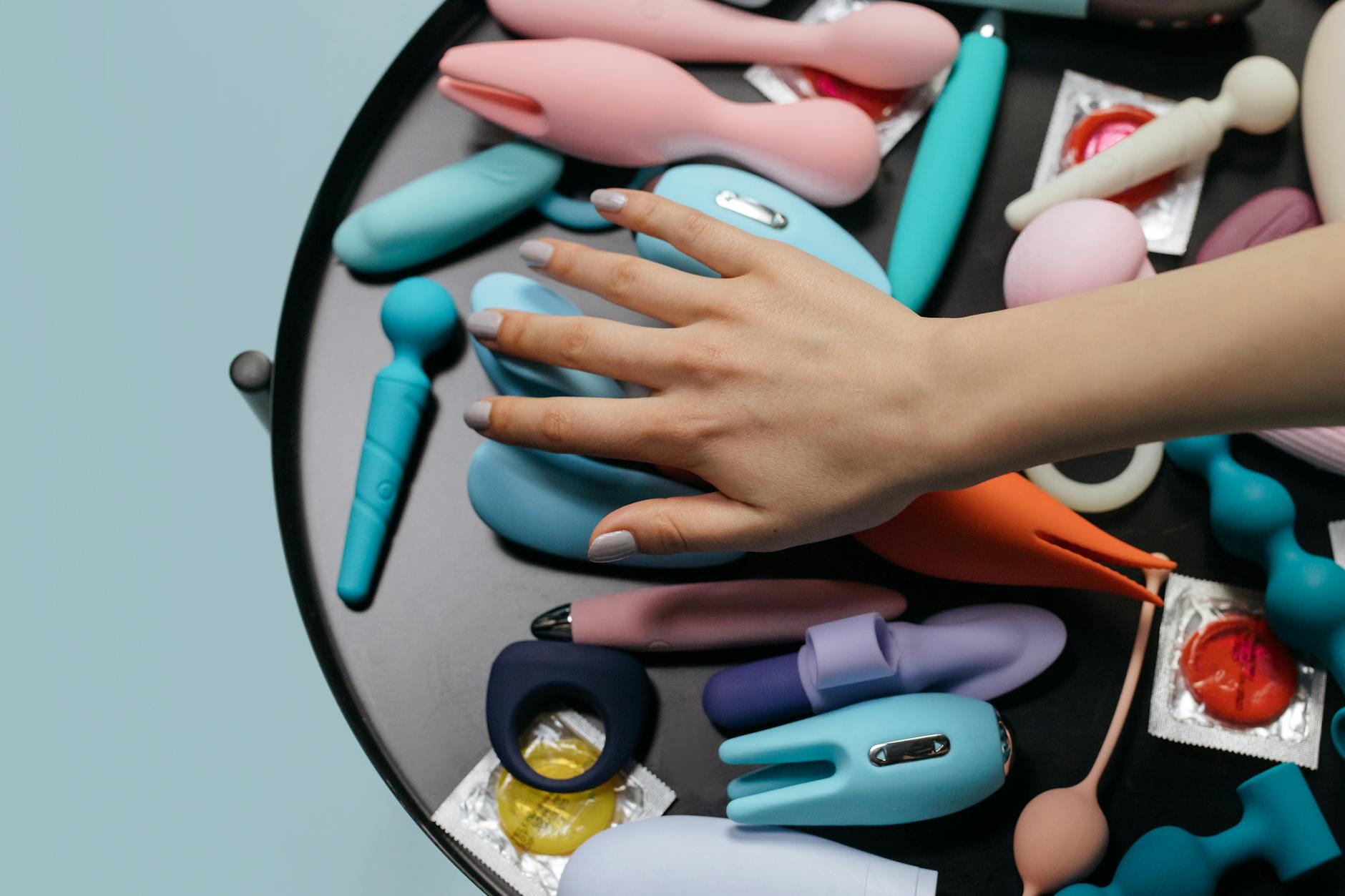
Let's be real about the resistance
You want to explore lemon vibrators. Your partner doesn't. This isn't a small disagreement. It lands somewhere between a practical problem and an emotional minefield, depending on why they're resisting in the first place.
The resistance rarely means what we think it means. It's almost never actually about the toy.
What's really happening when a partner says no to toys
Most partner resistance to lemon clitoral vibrators boils down to one of five root fears. Naming the actual fear is where everything changes.
Fear one: "You won't need me." They're worried that if you discover what a lemon vibrator can do, you'll prefer it to partner sex. This is actually a very specific anxiety about sexual adequacy and replacement.
Fear two: "This means something is wrong with us." They interpret your desire for toys as a sign the relationship is broken or the sex is bad. They're hearing "I want more because what we have isn't enough."
Fear three: "I'll feel judged." They worry that bringing toys into the bedroom means you're judging their body, their technique, or their sexuality. The toy becomes the messenger of criticism.
Fear four: "This is weird." Some people grew up with no language for pleasure devices at all, only shame or secrecy. A lemon vibrator to them feels like stepping into unfamiliar territory where they don't know the rules.
Fear five: "I don't know what you want from me." They're unclear whether you want them involved, whether they're supposed to use it on you, whether it replaces their hands entirely. The ambiguity creates anxiety.
None of these fears are solved by buying a vibrator and putting it on the nightstand. All of them are solved by conversation.
Start before the toy arrives
The cardinal mistake: introducing a lemon vibrator during or just before sex when defenses are down and feelings are running hot. Don't do that.
Instead, pick a neutral time to have the conversation. Not in bed. Not before sex. Not in a moment of frustration. A walk, a coffee date, a moment after you're both relaxed but still talking.
Here's what I recommend you say: "I've been thinking about trying some things to explore my own pleasure more. I'm interested in lemon clitoral vibrators, and I wanted to talk to you about it before I get one."
That's it. No justification yet. No "because you don't..." statements. You're stating a want clearly, and you're inviting them into the decision rather than surprising them.
Then pause. Let them respond. Don't fill the silence.
Address the specific fear you're hearing
When they express hesitation (and they might), you're listening for which of the five fears is underneath. The response changes depending on which one it is.
If they say "I feel like I'm not enough," you're addressing fear one directly. Say something like: "That's not what this is about. I want this because I want to know my own body better, and that actually helps me enjoy being with you more. I'm not replacing anything. I'm adding."
If they say "Why do we need toys if sex is fine?" that's often fear two (this means something is broken). Your response: "Good sex doesn't mean we can't explore. People get stronger at the gym even though they can already walk. This is the same idea."
If they seem uncomfortable or unfamiliar with the idea, that's fear four. Normalize it. "Lots of people use these. They're not weird anymore. And honestly, many couples find it makes sex more fun."
If they seem confused about their role, ask directly: "What are you imagining will happen? Tell me what you're worried about." Then address that specific scenario.
The pattern is: name the fear, contradict the belief underneath it with facts and reassurance, and clarify what you actually want.
The lemon vibrator conversation at work on anatomy and sensation
Here's something that often shifts resistance: a partner understands the device differently once they understand the anatomy.
A lemon clitoral vibrator works on nerve endings in the clitoris, which are separate from penetration sensation. You can explain this simply: "The clitoris has its own nerve pathway. A lemon vibrator stimulates that in a way hands or a body can't always do alone. It's not replacing anything. It's just a different kind of touch."
Some partners feel less threatened when they understand that clitoral stimulation and partnered sex are technically different pleasure channels. You can have one and still want the other.
Consider also: would they be more comfortable if they could see how the lemon toy works, or read about how lemon sexual toys are designed? Some people need information before comfort. Offering that is generous and practical.
Involving them (or not, and that's okay)
You have two paths here, and both are valid.
Path one: solo exploration. "I'd like to use this on my own sometimes, to understand my body better. That doesn't involve you, and it doesn't affect our sex." Some partners feel safer when the toy is clearly separated from partner sex. They can accept you exploring alone more easily than they can accept it between the two of you.
This is actually how many couples start. The partner becomes comfortable over time, and it naturally moves into shared sex later. No pressure needed.
Path two: collaborative. "I'd like you to be involved. Maybe you could use it on me sometimes, or we could figure out what feels good together." This requires more buy-in from them, but it can also create more intimacy if they're willing.
If you go this route, be very specific about what you're asking. "I'd like you to hold the lemon vibrator while we're together" is clearer than "use it with me." Clarity reduces the anxiety of not knowing what to do.
The role of time and exposure
Resistance often softens with time and low-pressure exposure. You don't have to solve this in one conversation.
Say you bring a lemon vibrator home, and your partner is still hesitant. You use it solo sometimes. You talk about it casually. "That felt really good," you might say without fanfare. Over weeks or months, the strangeness fades. What felt foreign becomes normal. Shame evaporates.
Many partners who initially resisted lemon clitoral vibrators become genuinely interested once they stop being theoretical and become real. The fear lives in imagination. Reality is smaller and less threatening.
When it's about shame, not logic
Some partners can't articulate the resistance because it lives in their body, not their thoughts. They feel uncomfortable or ashamed even if logically they understand it's fine. That's real, and it needs a different approach.
That discomfort often comes from their own upbringing or messaging about sex and pleasure. It's not about you. It's about them. Recognizing that distinction helps you not take it personally.
In that case, going slower and lighter often helps more than rational argument. Maybe they watch you use a lemon vibrator for pleasure without pressure for several months before they feel comfortable. That's okay. Healing shame takes time, and you can't rush someone else's comfort with their own sexuality.
What you do not owe them
Let me be direct: you don't owe your partner the right to veto your solo pleasure. Your body belongs to you.
If they object to you using lemon sexual toys alone, in private, on your own time, that's a control boundary that's worth naming. You can have compassion for their fear and still say, "I understand this makes you uncomfortable, but I'm going to explore my pleasure anyway. I'm doing this for me, not against you."
The relationship is built on communication and some compromise. But your private pleasure isn't something you should have to trade away. If they continue to resist even when you're not asking them to participate, that's a deeper issue about autonomy and respect that might benefit from couples work.
Moving forward without resentment
The worst outcome isn't that your partner says no to toys. The worst outcome is that you agree to never use them and slowly resent your partner for taking away something you wanted.
Resent poisons sex. It makes you pull away, get quieter, feel less connected. Your partner can feel it, even if they can't name it. Before long, the real problem isn't about the toy anymore. It's about feeling controlled or unheard.
Better to have a hard conversation now than to let resentment build. Better to find a path forward, even if it's not your first choice, than to sacrifice your pleasure and expect love to survive it.
The good news: most partners, when they understand the real fear isn't about the toy, and when they see that you're not asking them to be someone they're not, soften over time. The resistance often dissolves not because they suddenly love lemon vibrators, but because they love you more than they fear change.
Frequently asked questions
What if my partner says no and won't budge?
That's information. It tells you something about their flexibility, their capacity for growth, and how they handle your autonomy. You can sit with that. You can also decide that using a lemon vibrator solo, without their permission or knowledge, is a boundary you need. Some people do. That's your choice. But it's helpful to know you're making a choice, not just accepting a veto.
Can I use a lemon clitoral vibrator during partner sex if they're uncomfortable with it?
That depends on consent and communication. If you've told them you want to use one and they've said no to partnered sex with the toy, using it anyway is a breach. If they don't know, that's dishonest. But using it solo is always your call. You might also ask about a specific scenario: "What if I use it for a few minutes before you come in, or after you finish?" Narrowing the request sometimes makes it feel less overwhelming.
How long does it usually take for a resistant partner to come around?
It varies wildly. Some people come around in weeks. Others take years. Some never do, and that's worth knowing about your partner. The speed often depends on how much they trust you, how much shame they carry about sex personally, and how you handle the conversation. Patience helps, but boundaries matter too.
Is it okay to buy a lemon vibrator without telling them?
Technically, yes. It's your body and your money. But it changes the dynamic. You're choosing secrecy over honesty, which often creates more problems down the line if they find out. Most therapists recommend transparency, even when it's uncomfortable.
What if I feel ashamed of wanting a vibrator because of their reaction?
That's worth exploring. Your pleasure isn't shameful. Their discomfort doesn't make it shameful. If you're internalizing their hesitation as proof that your desire is wrong, that's a sign their reaction has had too much power over your self-perception. You might benefit from talking to a therapist or coach about why you're absorbing their judgment. Your pleasure matters.
Can using a lemon vibrator actually improve our sex life?
For many couples, yes. When one partner feels less pressure to be responsible for all of the other's pleasure, sex actually relaxes and becomes more fun. Some couples find that introducing toys opens conversations about pleasure that needed to happen anyway. But it only improves things if both people move toward it with openness, not if one person is pushed into it.
The path forward is conversation
Lemon vibrators are tools. They're not relationship fixes. But the conversation about wanting one can be a relationship opener. It gives you a chance to talk about desire, autonomy, fear, and what you both actually want from sex.
That conversation is worth having whether or not a lemon clitoral vibrator ends up in your bedroom. What matters is that your partner hears you, that you understand their fear, and that you both move toward a version of intimacy where pleasure isn't something either of you has to shrink to protect.
If you'd like to talk through how to have this conversation in your specific relationship, we're here. Reach out to /contact and let's work through the next step together.