The thing nobody says about taking time
Let's be real: there's a narrative that good sex is fast. That if you need twenty minutes to build to orgasm instead of five, something's wrong with you. Here's what's actually wrong: that narrative. Your body isn't broken because arousal takes time. Your body is normal. Most bodies are.
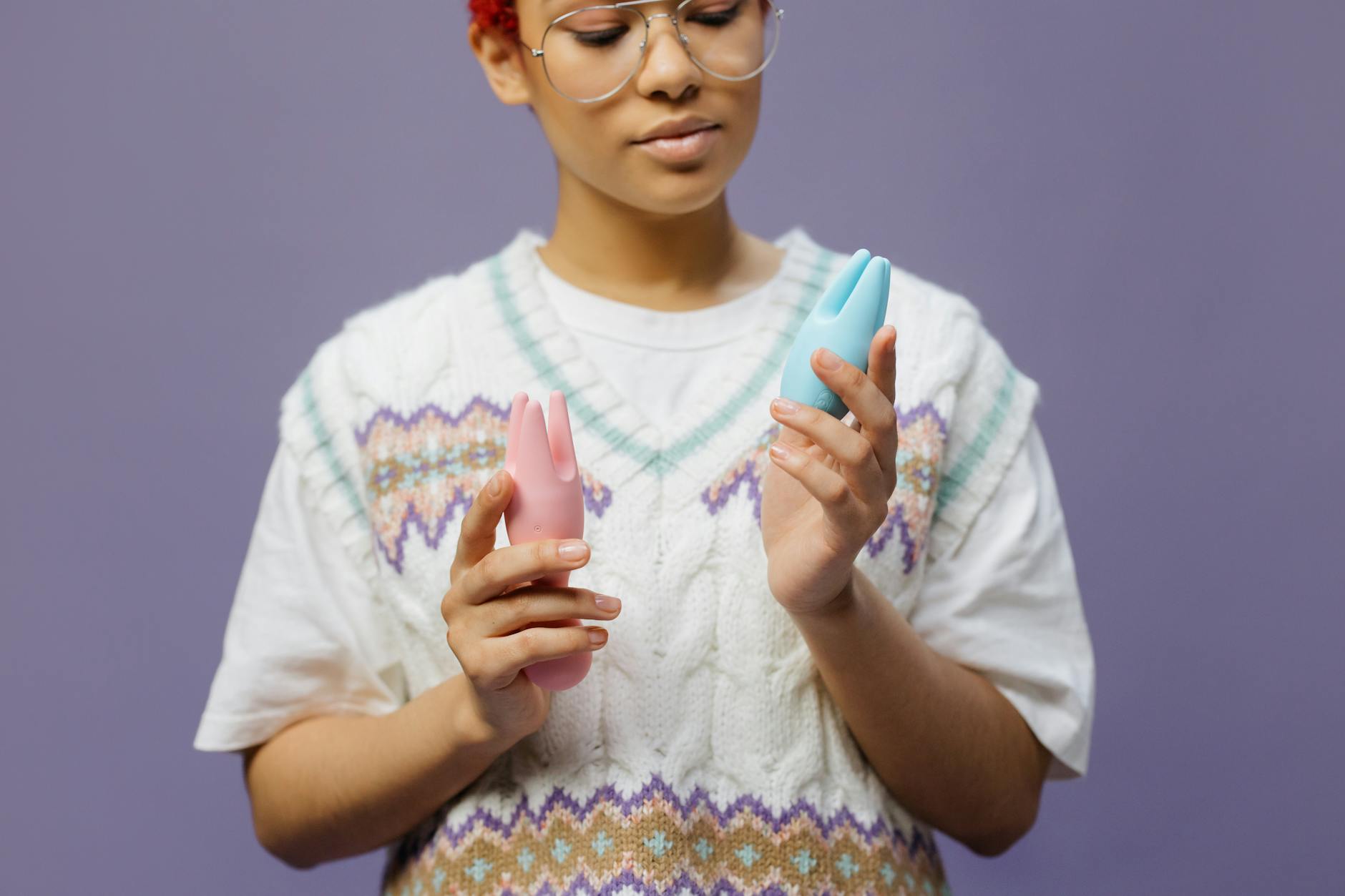
What is broken is the assumption that one speed fits everyone. Lemon vibrators, especially the air-suction design, work beautifully for people who need extended sessions because they don't fatigue your hand, they don't numb out the sensation, and they actually build intensity in a way that traditional vibrators often fail to do. You're not trying to speed up. You're trying to go deeper.
Why your arousal timeline is actually longer than you think
There's a cycle most people don't understand. The brain needs time to dial down the noise before it can tune in to sensation. That's not poetic. That's neurology. Cortisol, the stress hormone, actively blocks arousal pathways. It takes about 15 to 20 minutes of consistent calm for cortisol to drop enough that your nervous system shifts from alert to receptive.
Add to that: if you've been conditioned to feel rushed during sex, or if you're managing a partner's timeline, your system learns to speed up unnaturally. Then it gets tired. Then you think you can't come. You can. Your body just learned to finish the race before the finish line appeared.
And here's the thing nobody mentions: people with higher baseline anxiety often need more time. People returning to sex after a break need more time. People with responsive (rather than spontaneous) desire need more time. People carrying stress need more time. That's most people.
What makes lemon vibrators different for longer sessions
A traditional vibrator works by rapid friction. Your hand holds it steady, the motor vibrates, and sensation builds through repetitive stimulation. This is efficient for short bursts. But if you need twenty or thirty minutes, friction vibrators create two problems: hand fatigue and sensation burnout. The tissue gets overstimulated, the sensation flatlines, and you either push harder (ouch) or give up.
Lemon vibrators use air-suction technology, which mimics the feel of oral sex. Instead of constant friction, the sensation pulses and releases. This rhythmic pattern actually prevents numbing. Your nerves stay engaged because the stimulus isn't relentless. It's more like a conversation than a hammer.
For longer sessions, this matters enormously. You can stay at a lower intensity setting for 15 or 20 minutes and actually build arousal, rather than cranking up a traditional vibrator to setting 7 just to feel anything.
Setting up for the long game
If you know you need time, remove the clock. Seriously. Tell your partner (if there is one) that you're going to take however long you need. Set your phone across the room. The moment you're watching the time, your nervous system knows you're rushed, and arousal stops. You can't force it. You can only remove the barrier.
Second, warm up your body first. Not just your genitals. Take a warm shower. Move around a bit. Get a cup of tea. Give yourself permission to delay the actual session by 10 or 15 minutes while you settle into your body. This isn't procrastination. It's priming.
Third, start low. The lemon vibrator's lower settings are genuinely powerful. Most people skip them because they expect to need high intensity. But if you're building over time, starting at setting 1 or 2 and staying there for 5 to 10 minutes lets arousal compound naturally. You're not fighting numbing. You're teaching your body that it has time.
The pacing patterns that actually work
If you're using a lemon vibrator for a longer session, think of it less like "turn it on until orgasm" and more like building layers. Here's a structure that works:
Minutes 1-5: Exploration. Light contact. You're not trying to climax yet. You're just reconnecting with sensation. Pay attention to what feels good. Use setting 1. Let your hands roam.
Minutes 5-15: Building. You can increase to setting 2 or 3. Stay consistent. This is where your nervous system is starting to understand that you have time. No rushing.
Minutes 15-25: Variation. You might move to setting 4, or you might stay where you are and change position. Some people find that switching between direct clitoral contact and indirect contact (stimulating through clothing, or moving slightly off-center) keeps sensation fresh.
Minutes 25+: Release or plateau. You'll feel arousal either building toward orgasm or plateauing. Both are fine. Orgasm isn't the only win. Sometimes the win is forty minutes of sustained pleasure without numbing or frustration.
The key is that each phase is intentional. You're not waiting for the magic to happen. You're building it.
What to do when intensity doesn't build the way you expect
Sometimes, even with a great toy and solid pacing, arousal just stalls. You're at minute 20 and you feel stuck. Here's what usually helps:
Change the stimulus slightly. Move the toy, change the angle, or shift to a different pattern on the lemon vibrator. Even tiny variations can restart the signal to your nervous system. Your body gets used to one exact stimulus. Variety keeps things active.
Or: pause. Stop for two minutes. Breathe. Let the intensity drop. Sometimes arousal builds in waves, not lines. You go up, you plateau, you rest, then you go up higher. That's normal. That's even better, because each wave is more intense than the last.
Or: accept that today isn't the day. If you've been at it for 30 minutes and you're not trending toward orgasm, your body might just not be available right now. Pleasure is still pleasure. You don't need to finish.
Partners and the patient approach
If you're with a partner, this gets more complicated because now you're managing two bodies and two timelines. The thing that helps: separate stimulation into phases. Maybe you start solo with your lemon vibrator while they do something else (read, scroll, be present but not hovering). Then they join. Then maybe they use a toy on you, or with you, and you adjust the pace together.
The worst version: your partner watches you, waiting for you to come, which ramps your anxiety and makes everything take longer. The better version: they understand that your arousal timeline is yours, and they're here to participate, not supervise.
The mental shift that changes everything
Here's the thing I see most often. People who need more time have internalized shame about that. They think it means something is wrong with their body. It means something is right with your body: it's honest. It won't fake arousal it doesn't feel. It won't rush climax to satisfy someone else's timeline. That's the nervous system working correctly.
The lemon vibrator doesn't speed that up. It respects it. You can use it at any pace you want, for as long as you want, and the sensation actually improves with time rather than degrading. That's the real difference.
Your pleasure timeline is not a problem to solve. It's a reality to honor. Build around it. Give yourself the time. Use tools designed for patience, not speed. The orgasms you have after twenty minutes of sustained, unrushed arousal are often better than the quick ones. Your nervous system knows the difference.
Common questions about pacing and lemon vibrators
Why does my body need so much longer than my partner's?
Arousal speed is shaped by nervous system sensitivity, stress baseline, past experience with sex, and whether your desire is spontaneous or responsive. Responsive desire (you get turned on once touching starts) naturally takes longer than spontaneous desire (you're aroused before any contact). Neither is better. They're just different biological profiles. Lemon vibrators work especially well for responsive desire because they create sustained stimulation that gives your body time to catch up.
Can I use a lemon vibrator for the entire duration, or should I switch toys?
You can absolutely use one toy for a full session. The air-suction design of lemon vibrators is specifically engineered to prevent numbing, so you won't lose sensation the way you might with a traditional vibrator. That said, some people like variety. You might use a lemon vibrator for 10 minutes, switch to manual touch for 5, then return to the toy. There's no wrong answer. Do whatever maintains engagement.
Is it normal if I need quiet and no distractions while using a lemon vibrator for longer sessions?
Completely normal. Extended sessions require more mental presence. Distractions break that focus, which drops arousal back down and makes you start over. Creating a quiet, distraction-free space isn't asking too much. It's creating the conditions your nervous system needs to work properly.
What if my partner feels left out when I'm using a lemon vibrator solo for extended time?
This is a conversation, not a problem. Some partners enjoy being present while you explore your own pleasure. Some prefer to join midway. Some want to know you're available, even if they're not participating in the exact moment. Talk about what presence looks like for both of you. You using a lemon vibrator for 15 minutes isn't excluding them. It's inviting them into a more authentic version of your sexuality.
Does the lemon clitoral vibrator work better than other designs for longer sessions?
Yes, significantly. The air-suction technology creates rhythmic pulses rather than constant vibration, which means you can sustain sensation for longer without fatigue or numbness. Traditional vibrators are optimized for quick arousal. Lemon vibrators are optimized for depth. If extended sessions are your reality, a lemon vibrator is worth the investment.
How do I know if I'm taking too long?
You're not. There is no too long. The only metric is whether you eventually feel good. If you hit 45 minutes and you're still building, that's fine. If you hit 20 minutes and you've come three times, that's also fine. Your timeline is the right timeline. Ignore cultural narratives about sex duration. They don't apply to your body.
The real win
You came here because taking time makes you anxious. Like you're broken. You're not. You're someone whose body requires patience, and that's a feature, not a bug. A lemon vibrator respects that timeline. It doesn't punish you for needing 20 minutes instead of five. It actually works better the longer you stay with it.
Give yourself permission to take the time your body needs. Build arousal in layers. Use a tool designed for sustained pleasure, not speed. The orgasms you have after 30 minutes of real, unrushed connection are often the best ones you'll ever have. That's not slow. That's thorough.
Ready to explore pleasure at your own pace? Let us know what questions you have. We're here to help you understand your body, not rush it.