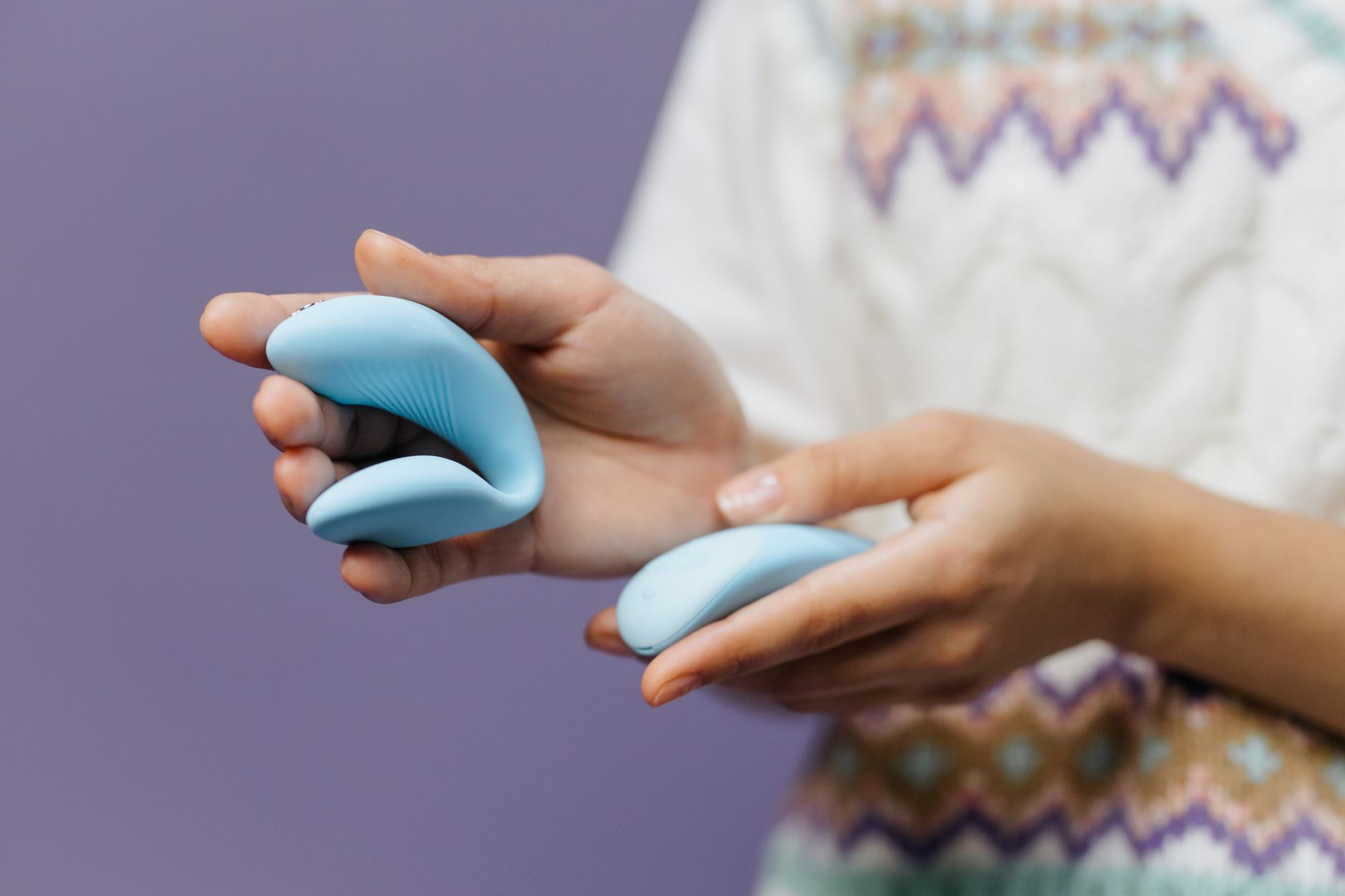
The awkward part nobody talks about
You've been seeing someone new. Things are going well. And you're thinking about introducing a lemon vibrator into the mix, but the thought of actually saying those words out loud makes your stomach flip.
That's completely normal. Even though sex toys are mainstream now, the gap between knowing that and actually bringing one into a relationship with someone new can feel enormous. What if they think you're not satisfied? What if it kills the mood? What if they think you're weird?
Here's what I've learned from working with hundreds of couples navigating this exact moment: the awkwardness lives in the anticipation, not the conversation itself. Once you actually say it, most partners respond with curiosity, relief, or enthusiasm. And the ones who don't? That's valuable information too.
Why the timing matters more than you think
There's a difference between bringing up toys when you're still figuring out sexual chemistry and introducing them when you've got a foundation of comfort and trust.
Ideally, this conversation happens when you're both relaxed and clothed. Not in bed post-sex when you're vulnerable, and not as a spontaneous "oh, I have this in my drawer" moment. You want enough lead time for them to process, ask questions, and actually get curious instead of defensive.
Think of it like this: you're not asking for permission. You're inviting someone into something that brings you pleasure. Frame it that way.
How to actually start the conversation
Four scripts that work, depending on your style:
The direct approach: "I've been thinking about trying a lemon vibrator. I'd love your thoughts on that, and I'd want to use it with you if you're interested."
The curious approach: "Have you ever used toys with a partner? I've been reading about lemon clitoral vibrators and they seem pretty amazing. Would you be open to exploring that together?"
The casual approach: "So, full transparency: I have a vibrator. I sometimes use it solo, and I've been wondering if you'd want to incorporate it when we're together."
The vulnerable approach: "This might feel like a weird thing to say, but I care about us having really good sex. I think trying a lemon vibrator could be fun for both of us. What do you think?"
None of these are perfect. Perfect doesn't exist. What they all do is communicate three things: you've thought about it (not impulsive), you want to include them (not replacing them), and you're inviting their input (collaborative, not demanding).
What to expect when you bring it up
Most responses fall into three buckets.
Enthusiasm. They think it's hot, they're excited, maybe they've been wanting to try toys too. This is the dream response. Roll with it. Set a timeline for actually doing it together (don't feel pressured to go that night).
Curiosity with hesitation. "I've never done this before" or "I'm not sure what I think." This is actually great. Ask what their concerns are. Common ones: worry about size, concern they can't "compete" with a toy, or just unfamiliarity. All addressable. Frame it as "this enhances what we do together, not replaces it."
Discomfort or rejection. Some people genuinely aren't interested in toys. Some have baggage about them. Some feel insecure. If this is your person's response, you have a choice: drop it, or loop back to it after you've built more trust. You don't have to abandon your own pleasure to stay with someone, but you also don't get to force them into something they're not ready for.
How to actually introduce the toy without it feeling clinical
Let's say they're game. Next step is execution, and this is where things can feel weird if you overthink it.
Don't make a production out of pulling out your lemon vibrator for the first time. Don't say "let me show you how this works" like you're demonstrating a kitchen appliance. Bring it into foreplay naturally. You're kissing, things are building, and at some point you grab it and say something like "I want to try this" or just start using it.
If you're nervous, saying "I'm a little shy about this, but I really want to try it with you" actually works. Most partners respond to honesty. They soften when they realize you're vulnerable, not demanding.
Let them watch. Let them touch it (clean hands). Let them see how it makes you feel. If they want to use it on you, you can guide them or tell them what feels good. This is collaborative.
One thing: the first time isn't the time to troubleshoot. If the timing feels off or the sensation isn't quite right, don't turn it into a problem-solving session mid-sex. You can explore that later solo or in conversation. In the moment, just enjoy what's happening.
The conversation after
This matters more than people think. Once you've actually done it, follow up when you're both calm and clear-headed.
"That was really hot" or "How did that feel for you?" or "I love trying new things with you" goes a long way. You're normalizing it, not making it weird. You're also opening the door to making it a regular part of your sexual repertoire instead of a one-off experiment.
If your partner had a strong reaction (positive or negative), ask about it. "You seemed into it" or "I noticed you held back. What was that about?" Questions create dialogue. Dialogue creates intimacy, even when things feel awkward.
Common fears and what's actually true
"They'll think I'm not satisfied with them." You might need to say this explicitly: "This isn't about you not being enough. It's about me exploring what feels good. I want to share that with you." This is true and worth repeating.
"It'll make sex feel less intimate." Sometimes the opposite happens. Introducing vulnerability (asking for what you want) and novelty (actual exploration) can deepen intimacy. But yes, if it doesn't feel right with this person, that's also real information.
"They'll think I'm too sexual or too weird." If someone thinks you're weird for having normal sexual desires and wanting to explore pleasure, that's their limiting belief, not yours. Your sexuality is not a character flaw.
"What if they want to use it and I don't want them to?" Boundaries still apply. "I love that you're into this, but I want to be the one using it for now" is completely valid. You can renegotiate later.
When lemon clitoral vibrators actually strengthen connection
Here's what I've observed in my practice: couples who can talk about sex toys usually can talk about sex, period. And couples who can talk about sex tend to have better sexual relationships and, often, better relationships overall.
Introducing a lemon vibrator isn't about the toy itself. It's about saying "your pleasure matters to me" and "I trust you with something vulnerable." That's the real intimacy.
Use it together. Use it solo while they watch. Use it as a bridge when arousal is slow to build with them. The specific mechanics matter less than the fact that you're experimenting together and supporting each other's pleasure.
If you're still nervous about bringing this up, that feeling usually passes the second you actually do it. Most people, when given the chance to talk honestly about sex with someone they care about, feel relieved. You might too.
People also ask
What if my new partner thinks I should already know how to orgasm without a toy?
That's outdated thinking, and you don't need to accept it. About 65% of women need clitoral stimulation to orgasm. Lemon vibrators aren't a workaround for something that's broken; they're a tool for pleasure. If your partner can't get on board with that, that's a compatibility issue worth addressing now, not later.
How long should I wait before bringing up toys with a new partner?
There's no magic timeline. Generally: when you've had sex a few times and the initial intensity has calmed down, so you can actually have a conversation without it feeling like a big ask. Anywhere from date three onwards is fair game, depending on how fast things are moving.
Should I ask permission first or just bring it to bed?
Always ask first. A toy appearing without warning can feel surprising or even violating, even if the person ends up being fine with it. The conversation is part of the pleasure. It builds anticipation and shows respect.
What if they ask to use it on me right away and I'm not ready?
Say so. "I want to use it myself first and get comfortable with how it feels." You can hand it to them another time, or never. There's no script that requires you to do anything you're not ready for. Your boundaries are not rejections of them.
Can using a lemon vibrator together help us bond faster?
Sometimes. Vulnerability and novelty are bonding, but only if both people are genuinely comfortable. Forcing it to happen faster than your actual comfort allows usually backfires. Let connection build at its own pace. Toys can enhance what's already there, but they can't create what isn't.
Is it weird if I want to use a lemon vibrator but my partner doesn't want toys in our sex?
Not weird at all. You can use your vibrator solo or ask them to be present while you use it without actively participating. Some people aren't into toys themselves but are fine with their partner using them. That's a compromise. Other people want toys completely out of the bedroom. If that's a dealbreaker for you, that's important to know now.
The bottom line
Introducing a lemon vibrator to a new relationship doesn't have to be a whole thing. You bring it up, they respond, and you either move forward together or you don't. The nervous feeling you have right now is just anticipation. Once you've had the conversation, it usually feels simpler than you thought.
Your pleasure deserves space in your relationships. That includes toys, communication, and partners who actually care about what you want. Start there.