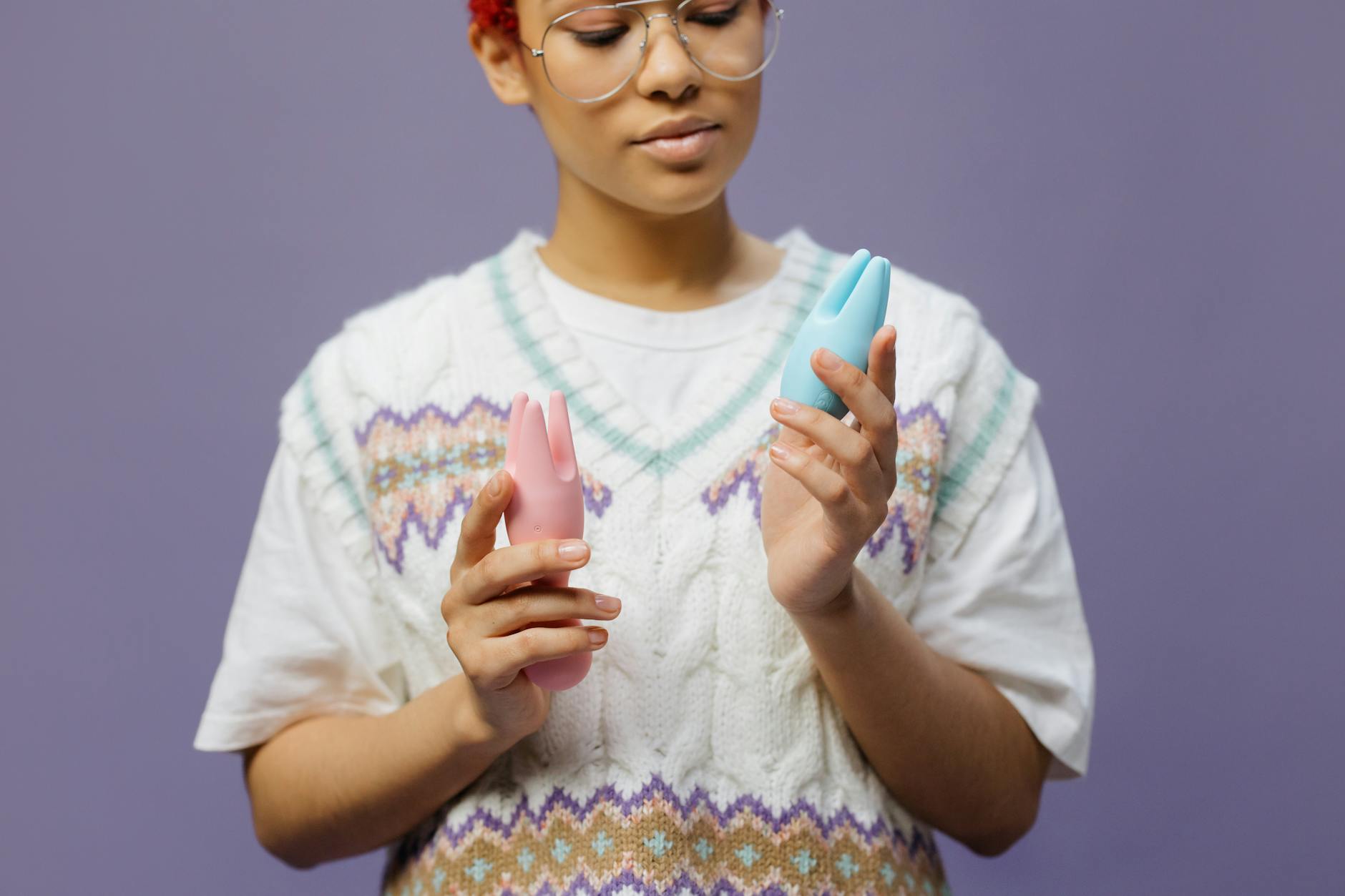
Let's start here: this is completely normal
There was a time when you could orgasm, wait five minutes, and go again. Now? You need 20 minutes. Or an hour. Or sometimes you're done for the evening after one. This isn't failure. This is your nervous system maturing.
Recovery time between orgasms is called the refractory period, and it's not a bug. It's a feature that changes throughout your life. For people in their 20s and 30s, it can be seconds or minutes. For people over 40 or 50, or anyone whose hormones have shifted, it often stretches to much longer. That shift catches a lot of us off guard because nobody talks about it. But it's not something to fix. It's something to work with.
What actually happens in your body during the refractory period
After orgasm, your nervous system needs to downshift. Prolactin rises. Blood pressure normalizes. The clitoris becomes extremely sensitive, even painful to touch. Your arousal literally can't build again until your body finishes that recovery cycle. This isn't laziness or dysfunction. It's your autonomic nervous system doing its job.
The timeline varies wildly depending on several factors. Age is one. Hormonal changes matter enormously. Stress, sleep, how much sex you've had recently, whether you're on medication, your overall health. Someone might need three minutes one day and 45 minutes the next. Both are fine.
Here's what changes the refractory period for most people: increased age, hormonal fluctuations (whether from menopause, birth control changes, or natural cycles), fatigue, stress levels, and medication side effects. None of these are fixable problems. They're just the body you have right now.
Why your lemon vibrator approach needs to shift
If you're used to chasing multiple orgasms back-to-back, the impulse is usually to power through. Use the same intensity. Keep going immediately. This often makes things worse because your nervous system isn't ready. You end up with numbness, frustration, or pain.
Lemon sexual toys work differently. The suction and patterns they use engage your nervous system in a way that's gentler and more distributed than direct vibration. This means they're especially useful when you need to work with a longer recovery window instead of bulldozing through it.
The shift you need to make is from "Can I get another orgasm immediately?" to "What does my body need right now?" Sometimes that's rest. Sometimes it's a different kind of stimulation. Sometimes it's waiting, but waiting with intention.
Strategy 1: Master the extended warm-up instead of rushing back in
Instead of diving back in with full intensity, use your lemon clitoral vibrator for low-intensity exploration during your recovery window. Start at pattern 1 or 2. This keeps sensation alive without pushing your nervous system into overwhelm.
What you're doing here is maintaining arousal during the refractory period rather than trying to blast past it. Use this time to explore different patterns, different pressures, different angles. You might find that what feels electric now is completely different from what worked before the first orgasm.
Many people report that this actually creates better second orgasms when they do arrive. Your clitoris isn't oversensitive anymore. Your brain is more awake to subtlety. You're not fighting biology. You're dancing with it.
Strategy 2: Separate pleasure from the orgasm goal entirely
Here's a reframe that changes everything: pleasure and orgasm are not the same thing.
You can have incredible pleasure without another orgasm. You can use your lemon vibrator to explore sensation, to feel good in your body, to stay connected to desire. Not every session needs an orgasm. Some of the best sessions don't have one. They're just long, slow, varied stretches of good feeling.
When you remove the goal of multiple orgasms, you remove the pressure that makes recovery time feel like a problem. You're not working against anything anymore. You're just... having pleasure. For its own sake.
Lemon adult toys are specifically designed for this kind of extended, non-goal-oriented use. The suction patterns let you shift sensation frequently without fatigue setting in. Use it to feel present in your body. That's enough.
Strategy 3: Use different types of stimulation during recovery
Your clitoris doesn't need a break from all touch. It needs a break from the same intensity that created the orgasm.
After you come, switch to indirect stimulation. This means using your lem vibrator through your underwear, or over your pubic mound rather than directly on the clitoris, or in your external genital area without direct contact. You maintain sensation without the overwhelming intensity.
You can also explore different body parts entirely. Many people enjoy breast stimulation, inner thigh sensation, or even just holding their lemon vibrator while it runs without it touching anything. The vibration alone can be lovely.
The key is novelty. Your nervous system is tired of the same signal. Give it something slightly different and it often wakes up faster than if you'd just waited.
Strategy 4: Check in with what your refractory period actually needs
Some people need movement. Some need complete stillness. Some need their partner nearby. Some need to be alone. Some need to slow their breathing. Some need to get up and move around.
Your recovery time isn't wasted time if you're using it intentionally. This is where the pleasure gets deeper because you're actually listening to your body instead of imposing a template onto it.
Use your lemon vibrator as a tool for exploration during this window, but also give yourself permission to set it down. You don't need to use it constantly. Use it when it feels right.
Strategy 5: Understand how your specific biology works right now
Start tracking your actual refractory period over a few weeks. Not obsessively, but notice it. Do you need 10 minutes? 30? An hour? Does it change based on stress, sleep, time of month, what you ate?
This information is gold because it lets you stop resisting what's true and start planning around it. Maybe you have one longer session instead of chasing multiples. Maybe you schedule sessions at times when you have energy and patience. Maybe you invite your partner to use a lemon clitoral vibrator on you while you rest, which keeps pleasure flowing without you having to do the work.
Research on refractory periods shows huge individual variation. Some people get longer recovery times with age. Others don't notice much change. Hormones matter a lot. But the only timeline that matters is yours. Stop comparing it to what it was five years ago or to what you think it should be.
The emotional piece that nobody mentions
Longer recovery time can feel like loss. You're grieving the body you had. That's real and it's worth acknowledging.
But what often emerges on the other side of that grief is something unexpected. Sex becomes less frantic. Pleasure becomes less about achievement and more about presence. You might find that the quality of individual orgasms is deeper, that you're more conscious during them, that you actually remember them afterward instead of immediately wanting another.
Your lemon sexual toys can be part of this transition. They're not a way to get back to how it was. They're a tool for discovering how it is now. And how it is now might actually be better.
Frequently asked questions
How long should recovery time between orgasms actually be?
There's no "should" here. Normal ranges from seconds to several hours depending on your age, hormones, health, and individual neurology. If you had orgasms 30 seconds apart at 25 and now need 20 minutes at 40, both are completely normal. What matters is understanding your own timeline and working with it rather than fighting it.
Can lemon vibrators make recovery time shorter?
Not directly. But they can help you use that recovery time more pleasurably. Lower-intensity stimulation, different patterns, and the gentle suction of lemon clitoral vibrators means you can maintain arousal and pleasure without pushing past where your nervous system is ready to go. That often makes the refractory period feel less frustrating.
Is longer recovery time a sign something is wrong?
Most of the time, no. Age, hormonal changes, medication, stress, and fatigue all naturally extend recovery time. If your recovery time increased suddenly (like overnight), or if it's accompanied by pain or complete loss of libido, talk to your doctor. But a gradual increase over years or a noticeable shift after a hormonal change? That's normal physiology.
Should I be using lemon vibrators differently during recovery time versus at the start of a session?
Yes. Start with lower patterns and gentler pressure during recovery. Save the higher intensities for when your nervous system is already aroused and ready. During recovery, think of your lemon adult toy as an exploration tool rather than a power tool. The same toy, different approach.
Can I have pleasure without orgasm using my lem vibrator?
Absolutely, and this is something a lot of people discover during longer recovery periods. Once you detach orgasm from pleasure, you realize pleasure is the point. Orgasm is just one possible outcome. Use your lemon clitoral vibrator to feel good in your body. That's complete on its own.
Does recovery time ever get shorter again?
Sometimes. Stress reduction, better sleep, staying active, and managing hormones can all help. But the goal isn't to shrink your recovery period back to what it was. The goal is to work with what you have and find pleasure in that reality instead of resisting it.