The tension trap is real
Let's be honest: penetration anxiety doesn't announce itself politely. It arrives as a full-body clench. Your pelvic floor goes rigid. Your breath gets shallow. And suddenly the thing you want to want feels impossible. The harder you try to relax, the tighter everything locks down.
This is not a character flaw. It's your nervous system doing exactly what it was designed to do, except it's overprotecting you. And the irony is brutal: anxiety about penetration causes the physical tension that makes penetration uncomfortable, which creates more anxiety. You're trapped in a loop.
The good news is that this loop has an exit. It's not through forcing yourself into penetration. It's through shifting your focus entirely, at least for now. And that's where lemon vibrators, specifically clitoral vibrators like the lem, become genuinely transformative.
Why clitoral focus bypasses the anxiety response
Here's the neurology: penetration anxiety activates your sympathetic nervous system (fight or flight). Penetration itself can feel like a threat your body is actively resisting. But clitoral stimulation activates a different pathway. Suction-based stimulation, the way lemon clitoral vibrators work, tends to engage your parasympathetic nervous system instead. That's the one responsible for rest, relaxation, and safety.
When you focus on clitoral pleasure without any penetration involved, you're essentially telling your nervous system: this is safe, this feels good, you can relax. Orgasms from clitoral stimulation are often more reliable too, which means consistent positive reinforcement. Your brain learns: pleasure is possible without the thing I'm anxious about.
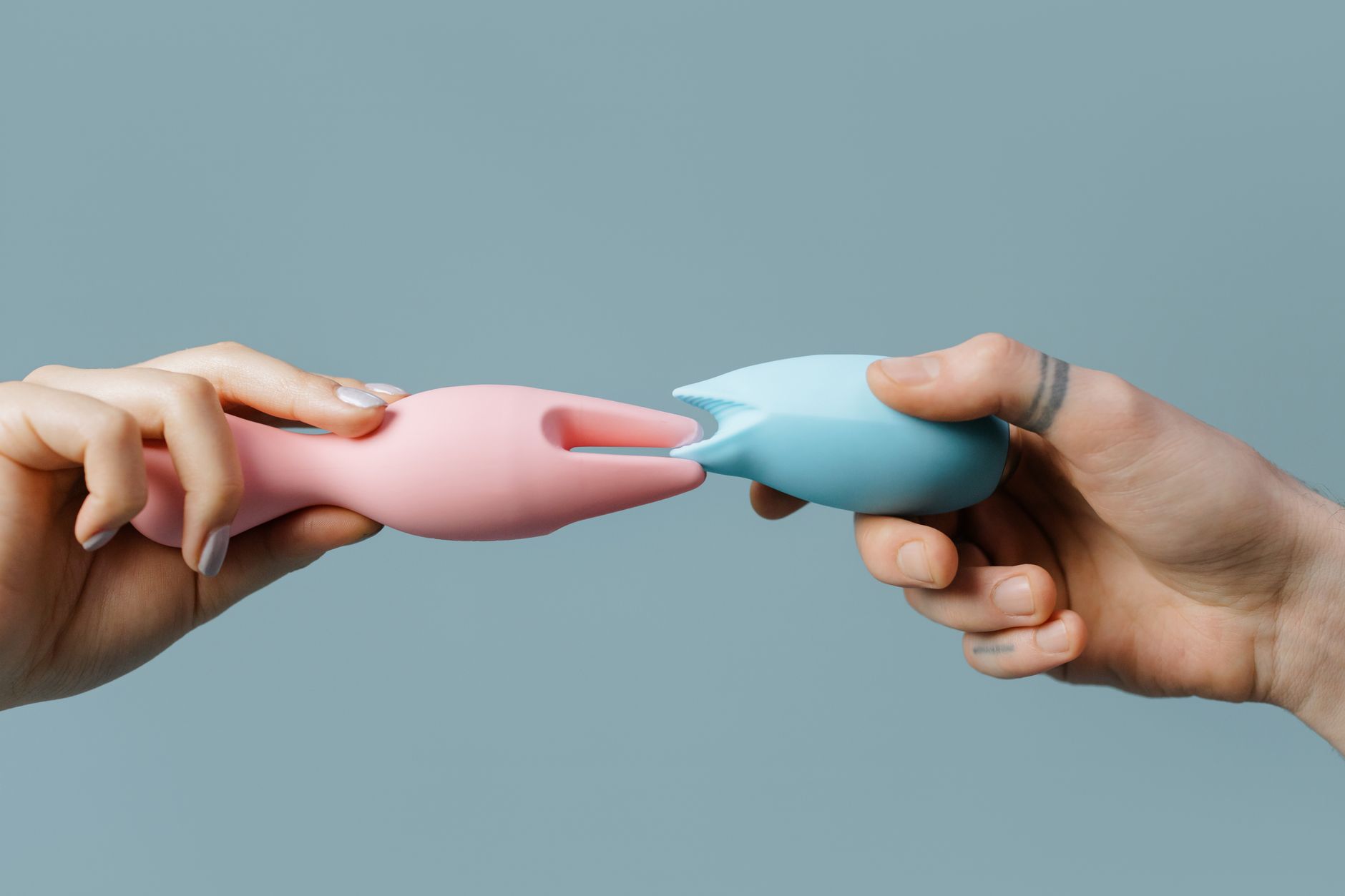
Photo by cottonbro studio on Pexels
This matters clinically. Research on anxiety and sexual response shows that breaking the anxiety cycle requires repeated experiences of pleasure without triggering the fear response. Lemon vibrators do this efficiently. You're not negotiating with penetration while anxious. You're building a separate, safer pleasure experience.
The pelvic floor connection
Penetration anxiety almost always involves pelvic floor tension. The muscles around your vaginal opening tighten reflexively. Over time, this tension becomes habitual. Your body forgets how to relax there, even when you want it to.
Clitoral stimulation with tools like the lem doesn't require pelvic floor relaxation the way penetration does. Instead, it rewires the relationship your body has with pleasure. When you orgasm regularly through clitoral stimulation alone, your pelvic floor learns that pleasure can happen when it's NOT clenching. That's the opposite of what penetration anxiety teaches it.
Many of my clients find that after a few weeks of consistent clitoral pleasure work, they naturally have less pelvic floor tension overall. Not through forced stretching or Kegels in reverse, but through the simple repeated experience of relaxation paired with pleasure. Your body starts to associate that area with ease instead of threat.
How to build a clitoral-focused practice
Start with zero penetration expectations. That's the non-negotiable part.
Set aside 15 to 20 minutes when you're actually alone and unhurried. Penetration anxiety usually gets louder when you're rushing or monitoring someone else's comfort. Eliminate that. Use a lemon clitoral vibrator because the suction pattern feels fundamentally different from traditional vibration. It's gentler, less jarring, and often more pleasant when your nervous system is already activated.
Begin at a low intensity. If you're using the lem or a similar lemon vibrator, start at intensity level 1 or 2. Let your body adjust. You're not racing toward orgasm. You're proving to yourself that this feels safe. Spend five minutes just exploring how it feels. Notice whether your pelvic floor is relaxing or still tensing.
If you notice continued tension, pause. Breathe deliberately. You might do a quick body scan: shoulders, jaw, hands, legs. Often anxiety lives in those places too. Relax them. Then return to the vibrator.
The goal over the first few sessions is pleasure, yes, but more importantly, repeated evidence that this activity is safe and doesn't require anything from you except showing up. No performance pressure. No penetration hovering in the background.
When to involve a partner
Once you've done this solo work, you might decide you want your partner present (or eventually, involved). That's different from partnered penetration. It's partnered clitoral pleasure, which carries almost none of the penetration anxiety triggers.
You might use the lem while they're in the room, doing their own thing. Or they might hold it for you. The shift from "you have to relax so I can penetrate" to "let's focus on what actually feels good for you right now" is often the moment couples' anxiety genuinely lifts.
Partners frequently report that watching their person respond to clitoral stimulation is hotter and more intimate than penetration ever was. Because there's zero performance pressure. There's just pleasure and ease.
The timeline is not negotiable
Here's what I always tell clients: you cannot think your way out of penetration anxiety. You cannot willpower your way out. You can only experience your way out, through repeated moments of safety paired with pleasure.
That takes time. Maybe four weeks of consistent clitoral focus. Maybe three months. Maybe longer if penetration anxiety is tied to past pain or trauma. But the timeline matters less than the consistency. If you practice clitoral pleasure twice a week for eight weeks, your nervous system will rewire. If you push yourself toward penetration before that rewiring happens, you'll restart the cycle.
Lemon clitoral vibrators work particularly well for this because they're effective enough that you get reliable pleasure without requiring your body to cooperate in a specific way. The lem's suction pattern works for most people, most of the time, which means you're stacking the odds in your favor.
Beyond the vibrator
Clitoral vibrators are the tool, but they're not the whole solution. Genuinely addressing penetration anxiety also requires some mental work.
If the anxiety is rooted in a specific incident (pain, assault, pressure), therapy helps. Cognitive-behavioral therapy and somatic therapy are both evidence-based approaches. If it's rooted in generalized tension or past relationships, a coach like me can help you identify patterns and rebuild your narrative about what penetration means and what it requires from you.
The vibrator gives you an exit ramp from the anxiety spiral. But healing the underlying anxiety often requires looking at what created it in the first place. Think of clitoral pleasure as the short-term safety net that gives you time and mental space to do that deeper work.
People also ask
Can using lemon vibrators make me more anxious about penetration eventually?
No. The opposite, actually. By building positive neurological associations with pleasure and relaxation in that area of your body, you're training your nervous system that the region is safe. That foundation of safety is what eventually allows penetration to feel less threatening, if you ever decide you want it. There's zero evidence that clitoral focus increases penetration anxiety. The research points the other direction.
What if I still want penetration but only clitoral stimulation feels possible right now?
Then you're exactly where you need to be. Many people find that after consistent clitoral pleasure work, penetration desire naturally returns without anxiety attached. You're not choosing one or the other permanently. You're healing the anxiety so that eventually, if you want both, both are possible without triggering tension.
How often should I use a lemon vibrator to actually shift my nervous system response?
Research on habit formation and nervous system rewiring suggests that three to four sessions per week for six to eight weeks creates measurable change in how your body responds. You don't need daily use. Consistency matters more than frequency. Two or three reliable sessions are more valuable than sporadic intense sessions.
Does my partner need to know I'm using a clitoral vibrator for anxiety purposes?
That's entirely your call. Some people find that keeping it private during the healing phase feels safer. Others find that telling their partner actually reduces anxiety because the partner understands it's not about them. If you do tell them, frame it as you taking care of your own nervous system, not as a reflection on them or the relationship.
Will lemon vibrators stop working if I use them too much?
Not really. Some people notice that they need to vary intensity or speed if they use the same vibrator multiple times per week, but that's normal. Your nervous system adapts. Switching between patterns or taking occasional breaks usually keeps things responsive. The lem, for instance, has multiple patterns specifically so you can vary your experience.
Can I use a clitoral vibrator if I have a history of trauma?
Yes, and often especially carefully. Start solo. Go slowly. You're in complete control of pace and pressure. Many people with trauma histories find that this kind of self-directed pleasure feels more healing than partnered sex because there's zero pressure and zero unexpected touch. That said, if trauma is involved, having a trauma-informed therapist in your corner is genuinely valuable.
The path forward
Penetration anxiety is not a life sentence. It's a signal that your nervous system needs time and safety before it can open. Lemon vibrators, specifically clitoral vibrators, give you a way to build that safety repeatedly and pleasurably. Over time, that rewiring changes everything.
You're not broken. Your body is protecting you. The work is teaching it that protection looks like relaxation, not tension. And pleasure without pressure is where that learning begins.
If penetration anxiety is connected to past pain or trauma, or if it's been persistent for a long time, reaching out to a therapist or coach can accelerate the process. You don't have to figure this out alone. But you can start right now with a tool, a quiet space, and permission to focus entirely on what feels good. That's already everything.