
Grief kills desire. What happens when it comes back?
Here's the thing nobody tells you: when you're grieving, pleasure doesn't just get quieter. It vanishes. The loss absorbs everything. Your body forgets what wanting feels like. And then, sometimes slowly and sometimes suddenly, it wakes back up. That moment is confusing. Maybe it feels premature. Maybe it feels disloyal. Maybe it just feels strange to your own skin again.
I work with people navigating this transition all the time. The grief isn't gone. The desire isn't replacing the loss. They're occupying the same body at the same time, and that's the actual challenge.
When grief and desire collide
Let's talk about the science first, because it helps. Grief triggers a cascade of stress hormones. Cortisol spikes, dopamine drops, and your nervous system camps out in survival mode. When you're in that state, arousal isn't a priority. Your body has correctly identified that immediate threats matter more than pleasure.
As time moves forward and the acute shock settles, your nervous system begins to regulate again. Dopamine returns. The ability to feel anticipation, excitement, and sensation creeps back in. This doesn't mean the grief is over. It means your body is beginning to remember that life includes more than survival.
For some people, this is a relief. For others, it's jarring. You might feel guilty. You might worry that wanting pleasure again means you're betraying whoever or whatever you lost. That's not how grief works, but the feeling is real and worth naming.
The tender complexity of returning desire
When desire starts to resurface, it often arrives with a particular texture. It's gentler than it was before. More careful. Sometimes it's not about intensity at all. It's about being present in your body again, which is a kind of intimacy in itself.
This is where many people get stuck. They expect desire to bounce back to what it was. They assume pleasure should arrive at full volume. Instead, it shows up quietly, almost apologetically, and they wonder if something's broken. Nothing's broken. You're healing in real time.
Some people find that their partner has also shifted during grief. Emotional closeness might have frayed. Sex might have stopped completely. Restarting intimacy doesn't mean erasing the grief or pretending you both weren't changed by it. It means choosing to reconnect in whatever form makes sense now.
Why lemon clitoral vibrators help with this specific transition
Here's what I recommend to clients moving through this space: tools that feel intentional, not demanding. Tools that work with your body's sensitivity rather than against it.
Lemon vibrators, particularly suction-based devices like the Lem, work well here for practical and psychological reasons. Physically, they deliver stimulation without requiring you to have a perfect understanding of what pressure or rhythm you want. You can start gently. The sensation is direct but doesn't require the intensity that some other vibrators need to be effective.
Psychologically, there's something about choosing a specific tool for this moment. It's a ritual. It says to yourself and your body: this is intentional. This matters. You're not just defaulting to what used to work. You're choosing what works now.
How to rebuild sensation slowly
When you're reacquainting yourself with pleasure, rushing defeats the purpose. Here's how to actually approach it:
Start with solo exploration first. This isn't selfish. It's honest. You need to know what your body wants before you're trying to coordinate with someone else's needs and presence. Spend time alone learning what feels good right now, in this iteration of your body and your life.
Use the lowest settings. If you have a lemon vibrator with multiple intensity levels, start at pattern one or two. Let your body tell you when it wants more. Sometimes what you need is 15 minutes at the gentlest setting, not a journey toward maximum intensity.
Keep lube nearby, always. Grief changes your body's baseline in ways that aren't always obvious. You might need more lubrication than you did before. Water-based lube is your friend here. It doesn't judge. It just helps.
Give yourself permission to stop. You're not trying to achieve an orgasm. You're trying to feel alive in your own skin again. If that means five minutes of gentle sensation and then stopping, that's a complete and successful experience.
When desire returns with a partner
If you're rebuilding intimacy with someone you've been grieving alongside, there's an extra layer of care needed. You're not just relearning your own body. You're relearning theirs. You're figuring out how two people who have both been changed by loss move together again.
Conversation matters more than it ever has. This isn't the time for assumptions. "I've been thinking we could try reconnecting physically" is not the same as "I want to have sex like we used to." Be specific about what you're imagining. Be curious about what your partner wants.
Some couples find that bringing a tool into the bedroom helps. It removes some of the performance pressure. A lemon clitoral vibrator becomes something you explore together, not a judgment on what's lacking between you. It's a third thing in the room, almost. A facilitator. Many people find this takes the edge off the vulnerability that comes with rebuilding intimacy after distance.
Honoring both the grief and the desire
One of the biggest mistakes people make is trying to pretend the grief isn't there while they're trying to reconnect with pleasure. That splits you in half. The reality is messier and more honest: you can be grieving and also want to feel good. You can miss someone and also want your partner. You can be sad and also be aroused. All of these things are true at once.
Lemon vibrators and other tools of pleasure aren't distractions from grief. They're evidence that you're still alive. They're proof that loss didn't consume everything. Your capacity for sensation, for connection, for wanting, is still there. It's just moving through a different landscape now.
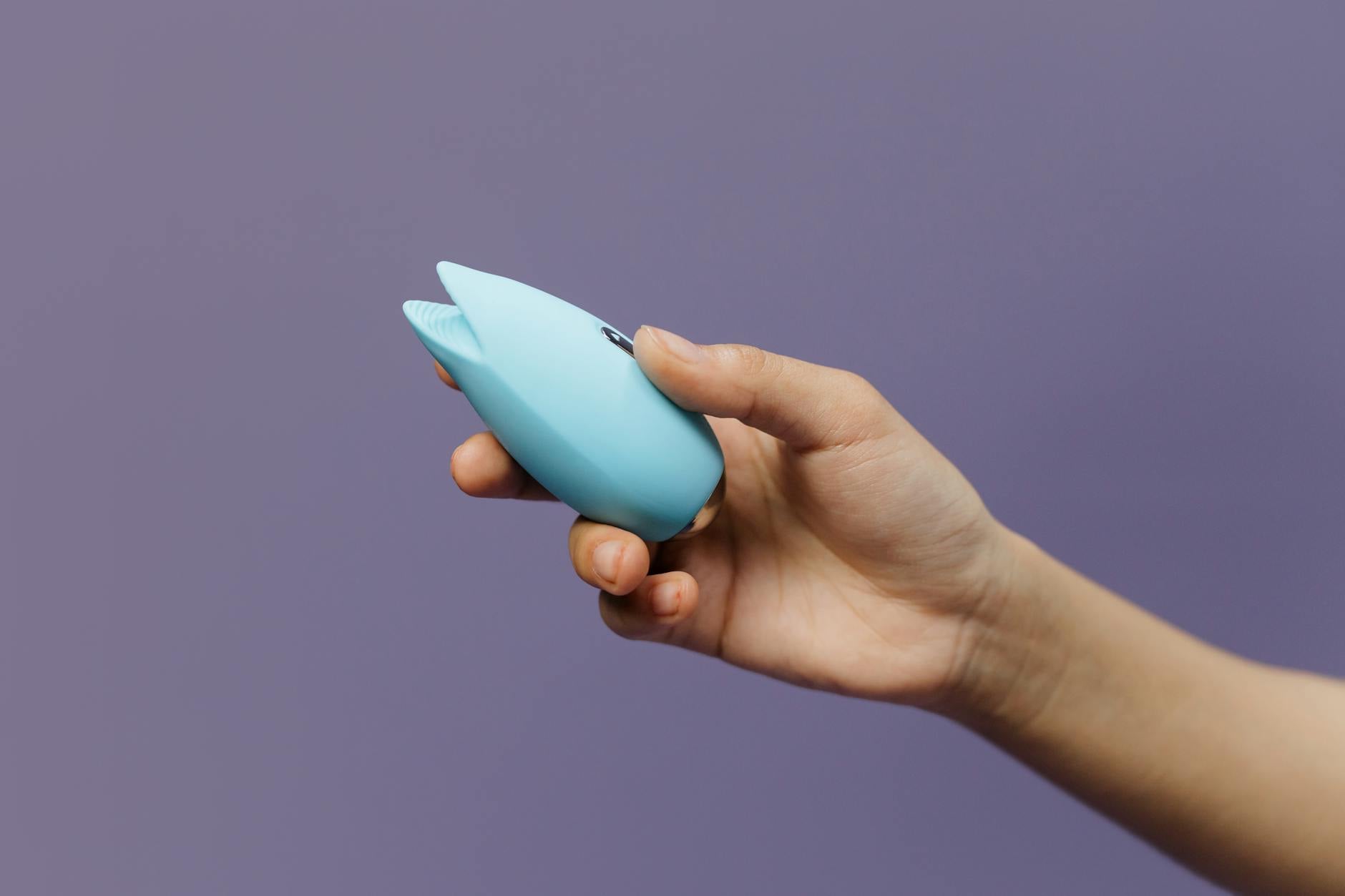
Photo by cottonbro studio on Pexels
When to move more slowly, and when to move forward
There's no timeline for this. I've worked with people who were ready to explore pleasure again three months after a loss. I've worked with others who needed a year or more. The grief doesn't follow a schedule, and neither should your return to intimacy.
What matters is listening to your own body and your own truth. If desire is returning and it feels right, that is information. If you're trying to force it because you think you should be "over it" by now, that's a different kind of information. Pay attention to the difference.
If you're with a partner, make space for both of you to be at different points in this journey. One person might be ready for reconnection while the other is still in deeper grief. That doesn't mean the relationship is failing. It means you both need patience and honesty.
And if you're exploring alone, remember that rebuilding your own capacity for pleasure is a profound act of self-care. It's not frivolous. It's not disrespectful to your grief. It's you, piece by piece, coming back to life.
The role of intentionality
Whatever tools you use during this time, the real magic is in the intention behind them. A lemon vibrator isn't special because it's expensive or fancy. It's special because you're choosing it as part of a deliberate practice of reclaiming your own body.
That choice matters. That ritual matters. The decision to stop just surviving and start living, even in small ways, is what heals. Your body is listening. And when you use a tool like a lemon clitoral vibrator to send the message that pleasure is allowed again, that you matter again, that your aliveness is worth honoring, something shifts.
Grief doesn't disappear. But it makes space. And in that space, pleasure can quietly return. Not replacing what was lost. Just coexisting with it, reminding you that you're still here, and you still deserve to feel good.
People also ask
Is it normal to feel guilty about wanting pleasure after grief?
Completely normal, and incredibly common. Your mind might interpret returning desire as a betrayal or a sign that you didn't grieve hard enough. Neither is true. Grief and pleasure aren't opposites. Your body remembering how to feel good is actually a sign of healing, not a sign of moving on too fast. The guilt usually fades as you give yourself permission to occupy both experiences at once.
How long does it typically take for desire to return after loss?
There's no standard timeline. Some people feel the return of desire within weeks. Others need months or years. Factors include the type of loss, your support system, whether you're grieving alone or with a partner, and your baseline resilience. Be patient with yourself. If desire hasn't returned after a year or more and it's causing you distress, talking to a therapist or counselor can help you figure out what's actually happening emotionally and physically.
Can using lemon vibrators help reconnect with a partner after grief?
Yes, if both partners are interested and ready. Introducing a tool can remove some of the performance pressure and vulnerability that comes with rebuilding intimacy after emotional distance. It becomes something to explore together rather than a situation where one person is waiting to be "ready." Start with clear communication about what each of you hopes for and take it slowly.
What if I feel more sadness than pleasure during intimate moments?
That's a sign to pause, not push harder. You might not be ready yet, or you might need a different approach. Some people benefit from opening up emotionally before or during intimacy with a partner. Others need to mourn more completely before pleasure feels accessible. Listen to what your body and heart are telling you. There's no wrong answer, just different paths forward.
Should I tell my partner that grief is affecting my desire?
Absolutely. Silence around this usually creates more distance. A simple conversation like "I'm still processing some grief around this loss, and it's affecting my body" opens the door to understanding instead of blame. Your partner might be grieving too. They might have been waiting for you to be ready and didn't know how to say it. Honesty here is the foundation for reconnection.
Is it okay to use lemon sexual toys alone while grieving, even if I'm in a relationship?
Yes. Solo exploration helps you stay connected to your own body during a time when everything feels fragmented. It's not replacing your relationship. It's maintaining your own internal landscape so you have something solid to offer when you're ready to reconnect with your partner. Many therapists recommend it, actually, as part of the healing process.