Let's talk about clitoral overload
Here's the thing nobody mentions: too much sensation can feel worse than not enough. Your clitoris has roughly 8,000 nerve endings concentrated in a space the size of a pea. Overstimulation is real. It can feel sharp, numb, almost painful, or like the pleasure just shuts off entirely.
If you've tried lemon vibrators and found yourself recoiling rather than leaning in, this isn't a problem with you. It's about finding the right approach.
Why some people find standard vibrators overwhelming
Clitoral oversensitivity happens for several reasons, and understanding which one applies to you changes everything about how you'll use any lemon sexual toy.
Some people's nerve endings are simply denser or more reactive. Others develop hypersensitivity after long stretches of abstinence, hormonal shifts, or even repeated use of the wrong intensity level. If you've spent months with a partner who applies firm, constant pressure, your clitoris may have adapted by becoming more protective.
Then there's the nervous system piece. If you're tense, anxious, or rushing, your body tightens around sensation rather than opening to it. This makes even gentle vibration feel jarring.
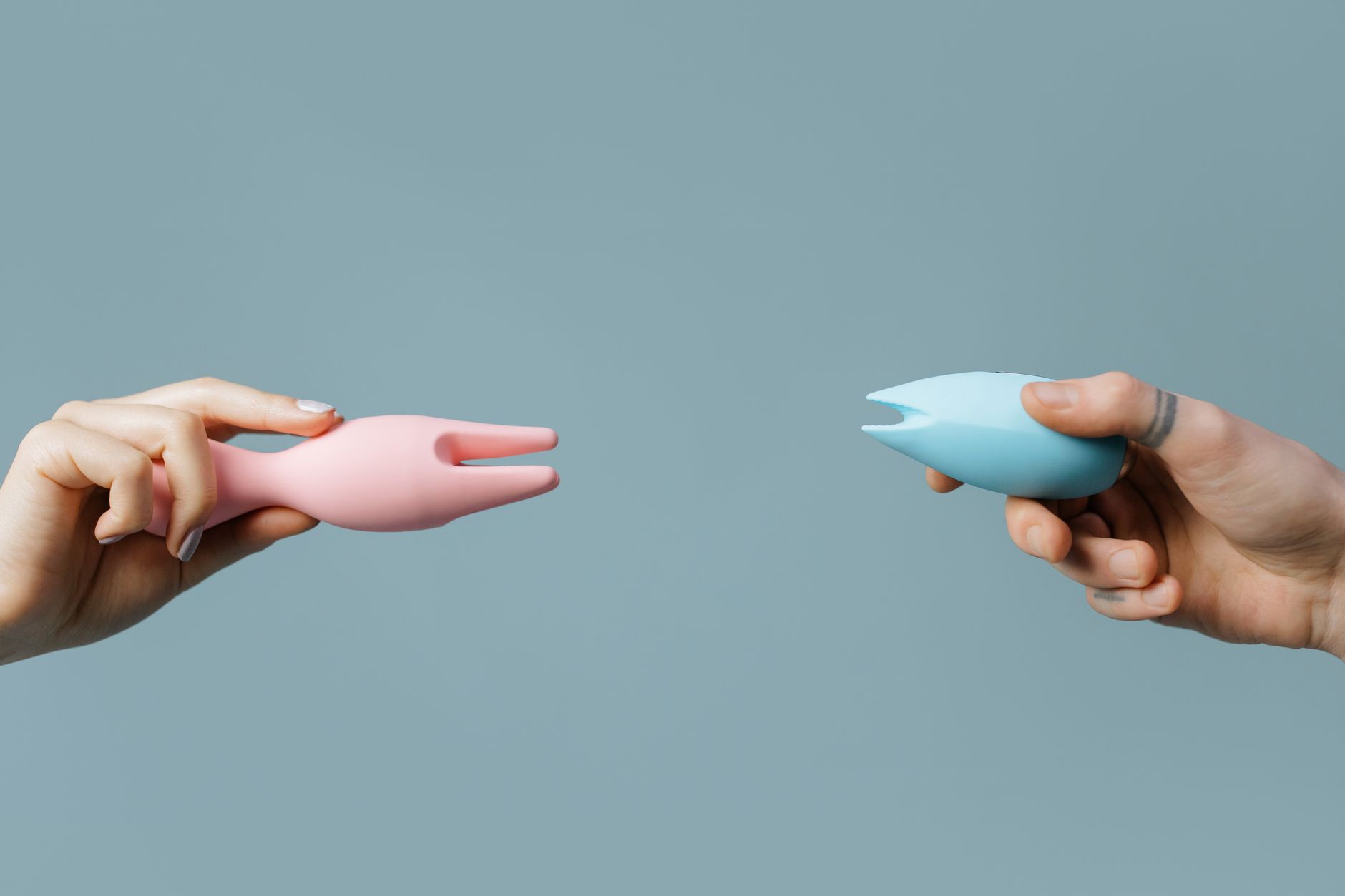
Photo by cottonbro studio on Pexels
The good news: lemon clitoral vibrators are uniquely suited to solving this because of how suction-based stimulation works. Unlike traditional vibrators that use rapid side-to-side motion, lemon vibrators create a gentle, enveloping sensation that many people with sensitivity find far more tolerable.
The gradient approach to using lemon vibrators
If standard lemon vibrator intensity leaves you wincing, try this progressive method:
Start with the lowest pattern on your lemon vibrator. Not the lowest power level. Most lemon adult toys have several patterns that pulse or wave rather than maintain constant suction. These feel different than the straight setting. Spend 5 to 10 minutes exploring which pattern feels least jarring. You're gathering data, not chasing orgasm.
Next, focus on indirect stimulation. Don't place the lemon vibrator directly on your clitoris. Instead, position it slightly to the side, over the inner labia, or at the top where the clitoral hood sits. The suction will still reach the nerve endings, but the sensation filters through tissue rather than hitting the most sensitive spot head-on. This small shift often makes the difference between pain and pleasure.
Build duration slowly. Use your lemon clitoral vibrator for just 3 to 5 minutes the first time. Stop before you feel numb or raw. Yes, even if you don't orgasm. Your goal is teaching your nervous system that this sensation is safe and can be pleasant. That takes time.
Lubrication and comfort
This matters more than you'd think. Even with suction-based lemon vibrators, a good water-based lubricant creates a smoother interface between the toy and your skin. It reduces friction, allows the suction to feel more like a gentle seal than a pulling sensation, and signals to your body that this is care, not urgency.
Apply lubricant generously to the head of the lemon vibrator and to your vulva. Reapply midway through. This isn't about sensation enhancement. It's about comfort and safety.
Pacing and mental space
Clitoral oversensitivity has a huge psychological component. If you're worried about pain, your pelvic floor muscles tense up in anticipation. That tension makes sensation feel sharper.
Before you use your lemon vibrator, spend 5 to 10 minutes on your own. Breathe slowly. Place a hand on your lower belly and notice the rhythm of your breath. Listen to something that makes you feel calm or curious, not rushed. This primes your nervous system to receive rather than defend.
When you do use your lemon sexual toy, let your mind wander. Don't focus on the sensation or try to force an outcome. Notice temperature, texture, the slight vibration against different spots. If your mind goes elsewhere, let it. Distraction is not failure. Sometimes the most intense pleasure happens when you're not scrutinizing it.
When to use more power and when to stay low
Most people assume they should build toward the highest intensity. That's backwards if you have sensitivity. You might find that patterns 1 or 2 on your lemon vibrator feel perfect, and that's your ceiling. There's no law saying you must graduate to pattern 5.
That said, some people find that after a few weeks of low-intensity use, their clitoris acclimates and higher settings become tolerable or even pleasurable. This is normal retraining, not addiction. Your nerve endings are simply learning that this type of stimulation is not a threat.
The test: if an intensity level feels reliably good after 10 minutes, and you feel relaxed afterward, you're at the right level. If you feel tender, numb, or sore in the hours after, you've gone too far.
Using lemon vibrators with a partner
If you're with someone, communication is not optional. Tell them: "When I use this alone, I use it on low intensity with indirect placement." That's the starting point. They may want to try higher power because they think more intensity equals more pleasure. It doesn't. In fact, the slowest settings on most lemon clitoral vibrators often produce the strongest, most sustained sensations because your body has time to respond.
Have them start far from your clitoris. Vulva skin is delicate. A lemon vibrator on the outer labia or perineum can feel wonderful without the overwhelming intensity of direct clitoral contact.
Duration matters as much as intensity
Here's something weird: you might have more satisfying orgasms with longer, slower sessions than with quick, intense ones. That's because orgasms built gradually tend to be fuller, and your nervous system doesn't go into protective shutdown.
If you're using a lemon vibrator, plan for 20 to 30 minutes of play, even if only the last 5 or 10 are on the actual toy. Spend time warming up. Let arousal build. Then introduce the lemon vibrator when you're already partly engaged, not cold.
Recovery and sensitivity cycles
Your clitoris has good days and bad days. Hormonal shifts, stress, how much sleep you got, whether you've been tense all day. all of it affects sensitivity. If your lemon sexual toy felt fine yesterday and overwhelming today, it's not the toy. It's your nervous system saying it needs something different right now.
On high-sensitivity days, skip the vibrator entirely or use the absolute lowest pattern with indirect stimulation. Use your hands or a partner's hands instead. There's no prize for consistent tool use.
FAQ: Clitoral oversensitivity with lemon vibrators
Why does my clitoris feel numb after using a lemon vibrator?
Numbness usually means either intensity was too high or duration was too long. Your nerve endings have a saturation point. Push past it, and they temporarily stop firing. This resolves in a few hours, but it's a sign to dial back next time. Start with 5 minutes on the lowest pattern, placed indirectly, and see how your body responds.
Can I use a lemon vibrator if I have vulvodynia or clitoral pain?
Maybe. Vulvodynia is complex, and what works varies wildly between people. Some folks with vulvodynia find gentle lemon vibrators actually reduce pain over time by desensitizing nerve endings in a controlled way. Others find any vibration intolerable. If you have diagnosed pain, talk with a pelvic floor physical therapist before introducing any vibrator. They can guide you on which approach is safe for your specific situation.
Is it possible to retrain my clitoris to tolerate more intensity?
Yes. Many people find that after several weeks of consistent, gentle use, their clitoris stops feeling so reactive. This isn't about pushing through pain. It's about gradual exposure in a supportive context. If you're interested in building tolerance, go slowly, stay with low intensity, and be patient. Retraining takes weeks, not days.
What's the difference between a lemon vibrator and other clitoral vibrators for sensitive people?
Lemon clitoral vibrators use suction rather than buzzing. Suction creates an enveloping, gentler sensation that many people with sensitivity prefer. They also tend to have more nuanced power settings. That said, the most important factor is finding what your specific body responds to. Some sensitive people prefer wand vibrators; others do better with lemon adult toys. Trial matters more than category.
Can oversensitivity be a sign of something wrong?
Not necessarily. Some people are wired for heightened sensation. But if oversensitivity is new or paired with pain, itching, or discharge, see a gynecologist. You could have a skin condition, infection, or hormonal shift that deserves attention. Oversensitivity itself isn't a problem. Pain is.
How do I know if I should stop using lemon vibrators or just adjust how I use them?
The answer depends on pain versus preference. If you feel sharp pain during or after use, something needs to change immediately. Stop and reassess. If the sensation just feels too intense but not painful, you probably just need to lower intensity, use indirect placement, or shorten duration. Most people with sensitivity find that adjustment, not abandonment, is the answer.
The big picture
Overwhelming sensation isn't a barrier to using lemon vibrators. It's information. Your body is telling you something about what it needs. Listen to it. Adjust. Go slower. Use less direct contact. Spend more time building arousal before you reach for the toy.
Lemon vibrators are incredibly versatile precisely because they can be dialed down to something almost imperceptibly gentle. That flexibility is the whole point. If you've been frustrated by clitoral overstimulation in the past, a lemon clitoral vibrator used thoughtfully might be exactly what shifts things.
For more on adjusting vibrators to your body's needs, read about how to use lemon vibrators when you need consistent sensation without numbness. And if you're dealing with broader pleasure disconnection, this guide on reconnecting with sensation might help too.
Your sensitivity is not a flaw. It just means you deserve tools and approaches tailored to you. That's exactly what lemon sexual toys make possible.