The mismatch nobody talks about
Here's what I hear in my office at least twice a week: "My partner wants sex three times a week. I want it once a month." Or the flip side. "I initiate every single time. I'm exhausted." Neither person is wrong. Neither person is broken. But the gap between their bodies is real, and it's creating distance.
Most couples try to solve this by negotiating frequency. "Let's aim for twice a week." That doesn't work because desire doesn't work by committee vote. You can't schedule arousal into existence.
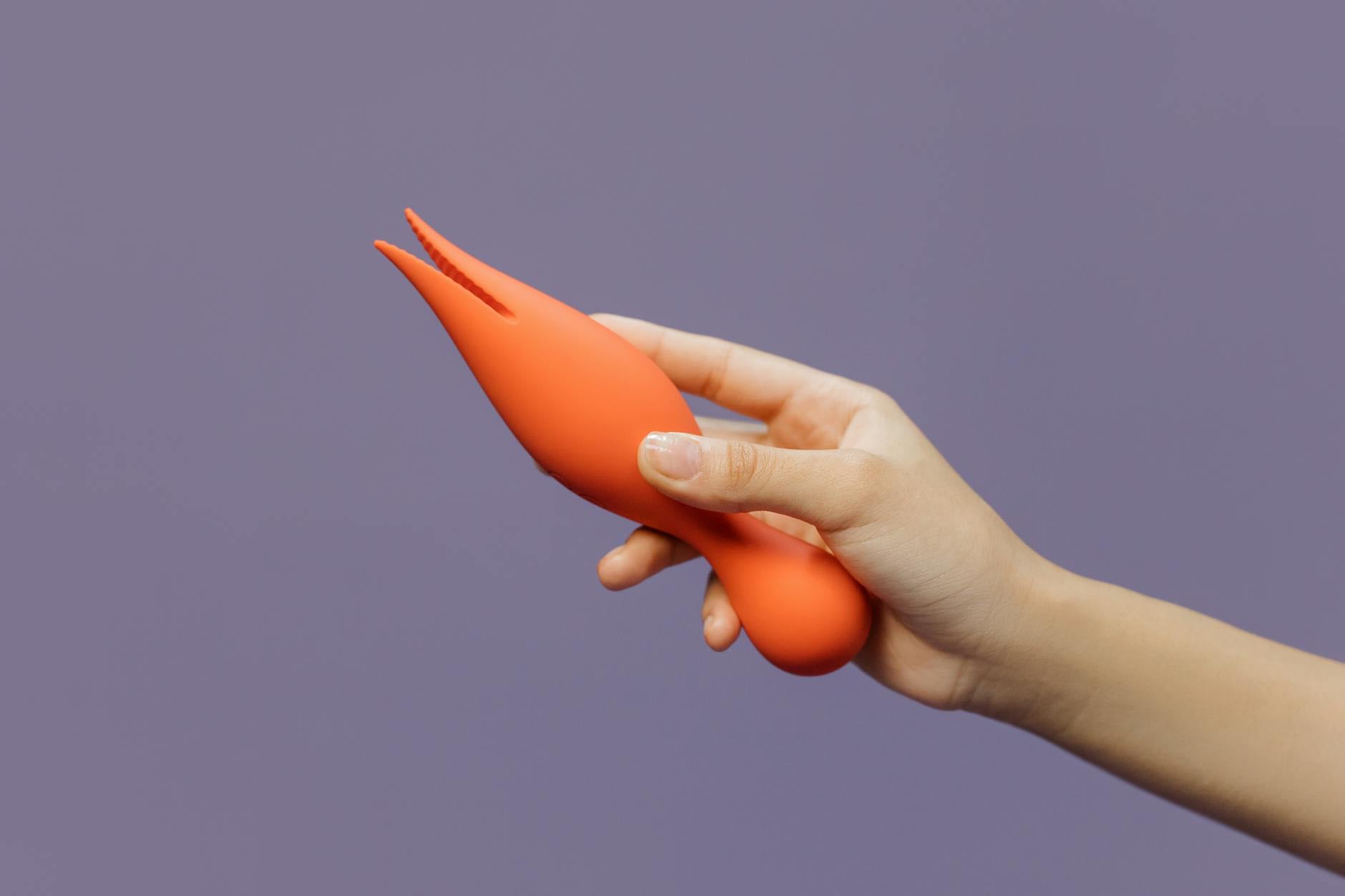
Lemon vibrators, specifically lemon clitoral vibrators like those from Hello Nancy, offer something different: a way for the higher-desire partner to feel satisfied without waiting for the lower-desire partner to catch up. And paradoxically, this often creates more actual shared intimacy, not less.
Why desire mismatch gets worse without a solution
When one person always initiates and the other always declines, two things happen. First, the person with higher desire starts feeling rejected. That's not a logical feeling. It's real. Second, the person with lower desire starts feeling pressure and resentment. Sex becomes a chore they're failing at.
Within 18 months, couples in this dynamic report that sex has become infrequent, mechanical, or nonexistent. The gap doesn't narrow. It hardens.
A lemon vibrator doesn't solve the underlying mismatch. It does something more practical: it gives the higher-desire partner an independent outlet that doesn't require their partner's participation. This removes the rejection dynamic entirely.
I'm not talking about a secret habit. I'm talking about something you both acknowledge, perhaps even watch or touch during. Something that exists in the light.
How to introduce the idea without creating defensiveness
This conversation is delicate because desire mismatch often comes packaged with shame. The higher-desire partner feels needy. The lower-desire partner feels inadequate. Neither of these stories is true, but both feel true.
Start with curiosity, not a solution. "I've been noticing the gap between what we both want sexually, and I don't want it to keep building resentment. I want to find something that works for both of us."
Then float the idea gently. "I've read about couples using vibrators not instead of each other, but alongside their own rhythm. What would you think about exploring that?"
Some partners say yes immediately. Some need time. Some need reassurance that this isn't about you being unsatisfied with them. It's not. It's about both of you getting what you actually need.
The conversation might go like this: "I love you and I love sex with you. I also have a body that wants physical pleasure more often than your body does right now. That's not a failing on either of us. Can we find a way for me to take care of that without resentment building between us?"
The three-layer approach that actually works
Honestly though, the best couples I've worked with use a three-part system.
Layer One: Solo sessions with a lemon vibrator. The higher-desire partner uses something like the Lem vibrator from Hello Nancy on their own, perhaps a few nights a week. This is private time. It's not a replacement for partner sex. It's nourishment for their own body.
Layer Two: Partner presence without pressure. Sometimes the lower-desire partner joins. Not to perform or participate, but just to be in the room. They might read, watch, touch their partner's arm. The point is that sexual touch exists in the relationship outside of "sex acts." This bridges the gap in a low-stakes way.
Layer Three: Occasional shared exploration. When both people feel like it, you explore together. The lemon clitoral vibrator becomes something you use on your partner, or they use on themselves while you're close. No script. No performance expectation. Just presence.
Many couples report that Layer Three becomes more frequent once Layers One and Two exist. Why? Because sex is no longer freighted with all of that rejection and resentment.
What changes when you both accept the mismatch
Here's the counterintuitive part. Couples who openly use vibrators tend to have more satisfying sex, not less. Why? Because the pressure lifts.
When the higher-desire partner knows they have an outlet, they stop approaching their lower-desire partner from a place of need. That changes the whole energy. Suddenly, when sex does happen, both people chose it. Neither person is compensating or performing.
The lower-desire partner often finds their desire increases slightly because the pressure is gone. This isn't about the vibrator being "better." It's about shame and resentment being terrible aphrodisiacs.
I worked with a couple recently where the wife wanted sex once a month and the husband wanted it three times a week. They were on the edge of separation. I suggested he use a lemon vibrator on his own while she stayed in another room reading. Six weeks later, they texted me that they were having more satisfying sex together than they had in years. The vibrator created enough relief that they could actually enjoy each other.
The logistics that matter
A few practical things: lemon vibrators are quieter than many alternatives, which matters if you're in a home with children or thin walls. The Lem from Hello Nancy, specifically, is designed to be compact and discreet. It's also designed for clitoral stimulation without numbing sensation, which means it's gentler than many alternatives.
Keep it accessible but not intrusive. Many couples store theirs in a bedside drawer, not hidden away. There's something about easy access that communicates: this is normal, this is okay.
Talk about maintenance. Lemon sexual toys need to be cleaned after use. Keep a small washable cloth nearby. This is not a barrier. It's part of the ritual.
If watching your partner use a vibrator on themselves feels awkward at first, that's normal. Awkwardness is not a sign you're doing something wrong. It just means you're doing something new.
When desire mismatch is a symptom of something else
I want to be clear: sometimes the gap in desire isn't just about libido. Sometimes it's a symptom.
If the lower-desire partner has recently gone through something difficult (surgery, grief, health issues), their desire may be genuinely suppressed. A lemon clitoral vibrator won't fix that. Time and support will. But it can offer a gentle pathway back to pleasure when they're ready.
If the mismatch appeared after infidelity or trust issues, vibrators alone won't rebuild that. Therapy does.
If one partner is experiencing depression or hormonal shifts, those require attention. A vibrator is an accessory to that work, not a replacement for it.
But if you're both healthy, both committed, and just wired differently? A lemon vibrator is one of the kindest solutions I've seen couples use.
The myth you need to shed
Here's what I want you to believe: your partner using a vibrator is not a referendum on your desirability. It's not proof that you're not enough.
Your partner using a vibrator is them taking care of their own body in a way that reduces pressure on the relationship. That's maturity. That's self-respect. That's actually a foundation for deeper intimacy with you.
Many couples find that once they normalize vibrators, they become something they use together sometimes, not instead of each other. The Lem vibrator or any lemon adult toy becomes a tool for shared pleasure, not a replacement for it.
Your desire mismatch is not a relationship problem you failed to prevent. It's a fact of living with another human. How you respond to it is what matters. Using tools, communicating openly, and respecting both people's bodies. That's how you build something that lasts.
FAQ: Couples, vibrators, and desire mismatch
Will using a vibrator make my partner want me less?
No. The opposite is far more common. When the pressure to perform all the sexual labor disappears, both people actually enjoy each other more. Couples who use vibrators often report their sex life together improves because resentment decreases.
What if my partner is uncomfortable watching me use a vibrator?
Start with privacy. There is no rule that says your partner has to watch. You might use a lemon clitoral vibrator in the bathroom or before they come to bed. Once they see that the world doesn't end, and that you're happier and less resentful, comfort usually follows. Some couples never watch each other and that's completely fine.
Does using a vibrator mean I don't want my partner anymore?
No. A vibrator is not a replacement for a person. It's a tool for your own body. You might genuinely love your partner and still want to pleasure yourself independently. Those two things coexist.
How do I know if a vibrator is the real solution or just a Band-Aid?
A vibrator is a Band-Aid if your real problem is relationship breakdown, infidelity, or loss of emotional connection. In those cases, you need therapy, not tools. But if your problem is specifically that you have different libidos and resentment is building, a vibrator genuinely addresses that problem.
Should we use the same vibrator together?
You can, but many couples prefer different toys. The Lem vibrator from Hello Nancy is designed for clitoral stimulation and is popular for couples play. But there's no rule. You each get to choose what feels good for your body. Some couples share. Some have their own. Both work.
Will introducing a vibrator mean we have less sex as a couple?
Often the opposite. Many couples report that once the pressure and rejection dynamic disappears, they actually have more sex together because both people want it. The vibrator removes the resentment that kills desire.
The bottom line
You and your partner don't have to want sex at the same frequency to have a healthy sex life. You do have to be willing to talk about the gap and find a solution that respects both of your bodies.
Lemon vibrators, specifically lemon sexual toys like those from Hello Nancy, are one practical solution that works remarkably well when both people approach them with curiosity instead of defensiveness.
The goal isn't to fix desire mismatch. The goal is to manage it in a way that actually deepens your intimacy instead of eroding it.
If you're facing this in your relationship and want to explore what might work for both of you, consider reaching out. A conversation with someone trained in relationship dynamics can help you navigate this in a way that feels safe for both of you.