
Here's the thing about new partners and pleasure devices
Most people assume you have to hide your lemon vibrator until you've been together for months. Wrong. The couples who build the strongest sexual connection early are usually the ones who talk about pleasure before shame gets a foothold.
Introducing a lemon clitoral vibrator to a new partner doesn't require a formal conversation or a PowerPoint. It requires honesty, context, and the right moment. This is how to do it.
Why the early-stage conversation actually works better
Here's something most people don't realize: new partners are often more open to toys than long-term partners. Why? Because in the first months, there's less ego on the line. You haven't yet built a story where "I've always been this way" blocks change. Everything feels fresh and possible.
When you introduce a lemon vibrator early, you're saying, "This is who I am. This is what feels good to me. Are you interested in exploring that together?" It's not a critique of what your partner was doing before. It's not a fix for a broken relationship. It's just information.
People with new partners often report higher arousal, more frequent orgasms, and deeper emotional intimacy when toys are part of the conversation from the start. That's not coincidence. It's what happens when you remove the secrecy.
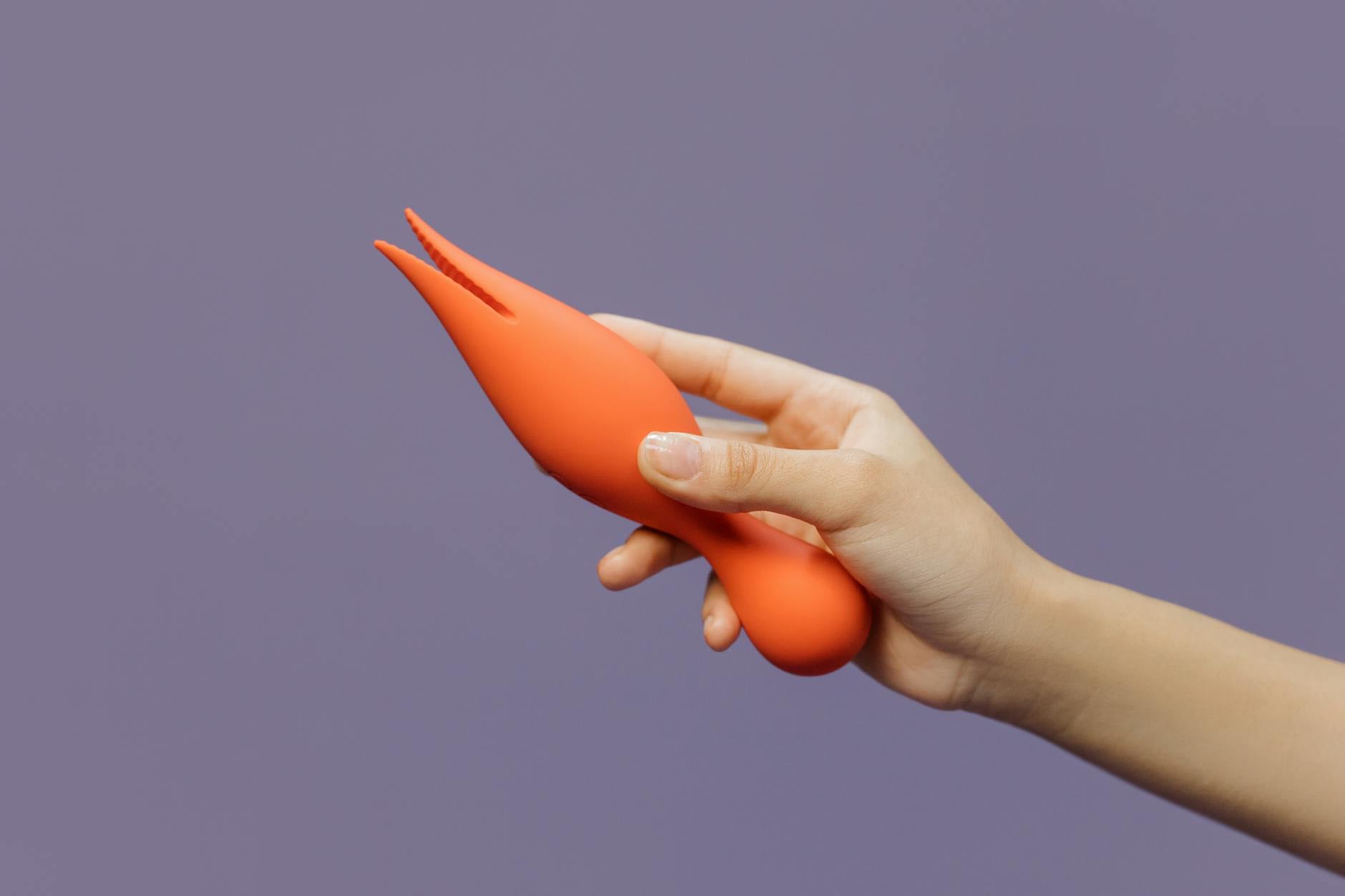
Photo by cottonbro studio on Pexels
How to frame it without triggering defensiveness
The framing matters. A lot. Here are the phrases that work and the ones that backfire.
Don't say: "I need a vibrator to come." (This sounds like your partner isn't enough.)
Do say: "I come really reliably with clitoral vibrators like my lemon vibrator. I'd love for you to watch, or use it on me, or try it together." (This is descriptive, not comparative.)
Don't say: "Most people use vibrators." (Statistically true but defensiveness doesn't care about stats.)
Do say: "I love how this feels, and I want to experience that with you in the room." (This makes it about connection, not about what everyone else does.)
The key is separating you from your partner. Your pleasure is not feedback on their performance. Lemon sexual toys are not a judgment. They're a tool that lets you feel more of what your body is capable of. A secure partner gets that immediately.
Timing: when and how to bring it up
Don't introduce a lemon vibrator mid-sex for the first time. Do introduce it when you're both clothed, relaxed, and the conversation can breathe.
Ideal timing is after you've had good sex a few times. You've got baseline chemistry. You've tested that they respond well to feedback. Now you say, "Hey, I want to show you something that really works for me." Then show them a video, or your device, or both.
If they ask questions, answer them directly. "Why do you like it?" Because the sensation is consistent and intense. "Does this mean I'm not enough?" No. It means you're interested in exploring what feels good together.
If they react with humor, that's often good. If they react with curiosity, that's very good. If they react with defensiveness, that tells you something true about them. Don't steamroll it. But don't abandon your own pleasure either.
The first time using it together
Slow down. Don't use your lemon vibrator the same way you would alone. The first time is about presence, not performance.
Start with your partner watching. Let them see how your body responds. This is incredibly intimate and also incredibly informative for them. They learn what turns you on. They see arousal happen in real time. For many people, this is the hottest part.
Then invite them to use it on you. Start at lower settings. Let them explore the angle, the pressure, the rhythm. Most partners, once they get over the initial awkwardness, become fascinated by what they can do. You're essentially giving them a second set of hands.
After a few sessions, you might use it during penetrative sex, if that appeals to you. Or keep it a solo-with-partner situation. The point is that you're deciding together, not defaulting to shame.
How lemon vibrators specifically help with new-partner dynamics
Lemon clitoral vibrators are particularly good for early-stage couples because they're focused, controllable, and the sensation is unmistakable. There's no ambiguity about whether something is working.
This clarity actually reduces anxiety. Your partner doesn't have to guess whether you're enjoying yourself. The vibration does the talking. Many partners find this relaxing. It takes pressure off them to intuitively know your body when they barely know you yet.
The suction design of many lemon vibrators also means your partner can use it hands-free in some configurations, which opens up other kinds of touch and connection. You're not either-or. You're both.
If you're the partner being introduced to lemon vibrators, remember this: a vibrator isn't replacing you. It's expanding the menu. You're still the person they chose. The toy is just making the experience richer.
The conversation about exclusivity and comfort
As things progress, you'll want to talk about a few practical things.
Storage. Where does your lemon vibrator live? In a nightstand drawer? A locked box? This matters because it affects whether your partner feels comfortable knowing it's there. (Most do. Some prefer not to see it regularly. Both are fine.)
Hygiene. Lemon vibrators should be cleaned with warm water and mild soap or a toy cleaner before and after use. If you're sharing, this isn't negotiable. It's not sexy to talk about, but it's necessary.
Boundaries. What happens if your partner wants to use a toy on themselves with you in the room? Are you both interested in that exploration, or is it one-way? These conversations prevent resentment later.
Solo use. Does your partner feel okay with you using your lemon vibrator alone? Most do. Some have insecurity about it. Neither reaction makes them bad. Just different. Know where you both stand.
What happens when someone resists
If your new partner hears "I want to use my lemon vibrator" and shuts down, that's data. It doesn't mean they're wrong. It means their relationship to pleasure, toys, or control is different from yours.
You have options. You can explore what's driving the resistance. Sometimes it's religious conditioning. Sometimes it's past trauma. Sometimes it's just ego. A good partner, even a new one, will be willing to talk about it.
But you don't have to wait. You don't have to hide your pleasure to make someone comfortable with your body. If someone can't get there, that's information about compatibility.
Building a shared pleasure language
The couples who thrive sexually are the ones who talk about pleasure like it's normal. Not constantly, not clinically. Just openly.
When you introduce lemon vibrators early and handle it with confidence, you're establishing that pattern. You're saying, "In this relationship, we talk about what feels good. We try things. We're curious instead of ashamed."
That foundation changes everything. It's easier to ask for what you want later. It's easier to navigate change, challenge, or boredom. You've already practice the hardest conversation.
Your new partner gets to decide whether they want that version of intimacy. But they get to decide from a place of information, not surprise. That's fair to both of you.
FAQ: Using lemon vibrators with a new partner
Should I tell a new partner about my vibrator before we're intimate?
Not necessarily before your first time together, but definitely before you're in bed and about to have sex. Somewhere in the first few intimate encounters is ideal. It gives you both time to process and ask questions without performance pressure.
What if my new partner thinks vibrators mean I don't like them?
That's their fear talking, not logic. You can address it directly: "I'm attracted to you. I like how we feel together. A vibrator is an addition, not a replacement." If they stay insecure about it after a calm conversation, that's a sign of broader issues with control or insecurity you'll want to assess.
Can I use a lemon vibrator during penetrative sex with a new partner?
Yes, once you've established comfort with it. Many couples find that clitoral vibration during penetration creates a fuller sensation. Start in positions where access is easy, and communicate about pressure and rhythm. Your partner might need to adjust slightly, but most adjust quickly.
Is it weird to ask my new partner to use the lemon vibrator on me?
No. In fact, many partners find it hot. You're inviting them into your pleasure. You're showing trust. That's intimate. Just ask casually: "Would you want to try using this on me?" If they say yes, great. If they need time, give it to them.
What if I want to use a lemon vibrator solo while my new partner is around?
That's a conversation, not a secret. Some partners love watching. Some prefer to leave the room. Some want to participate. Everyone's different. But hiding it suggests shame, and shame is the enemy of good sex.
How do I know if introducing a lemon vibrator is a dealbreaker for my new partner?
You'll know quickly. If they're genuinely opposed and unwilling to explore their resistance, that's useful information about compatibility. But most partners, given honesty and context, are curious or supportive. Don't assume rejection before you even try.
The long view
New relationships feel fragile. They're not. They're actually more resilient when you build them on honesty. Introducing lemon vibrators early, when you're learning how to use them for mutual pleasure, is one of the best ways to establish that foundation.
Your pleasure matters. Your body's preferences matter. Your need for specific sensation matters. A partner worth keeping understands that. And if they don't yet, a calm conversation might get them there.
Start with confidence. Lead with context. Invite curiosity. The awkwardness disappears faster than you'd think.