Let's start with the honest part
Hormonal sensitivity isn't something you're imagining. Your pleasure threshold genuinely shifts with your cycle, your medication, your stress levels, and yes, your hormones. What works brilliantly one week can feel like too much the next. That's not a personal failure. That's your nervous system responding to real biological changes.
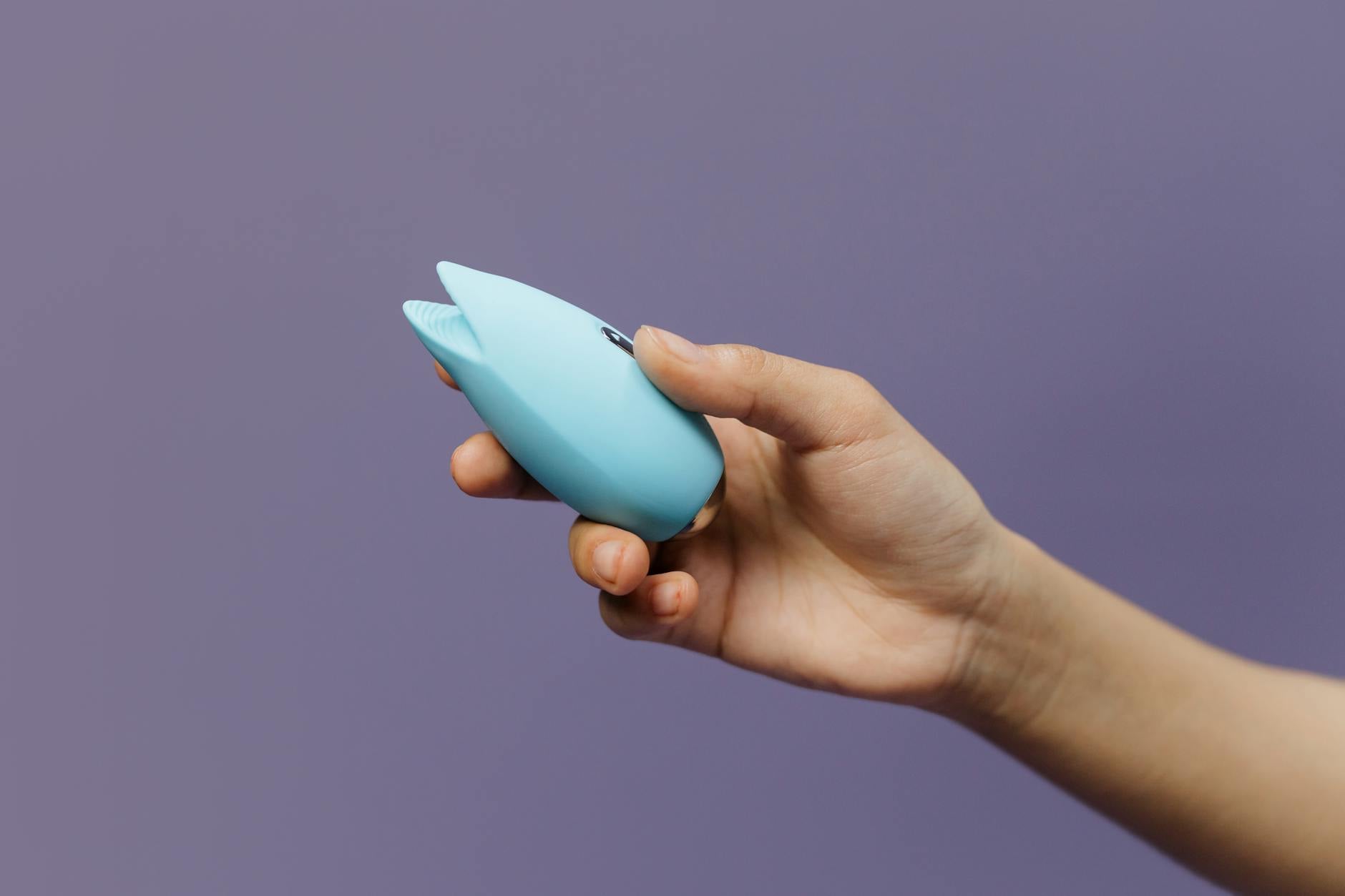
The problem is that most vibrators are built on a one-speed assumption: vibration intensity is the only variable that matters. But when your hormones are in play, the type of stimulation matters more than the amount. Lemon clitoral vibrators, which use gentle suction rather than traditional vibration, work with your hormonal rhythm instead of against it.
Why hormonal sensitivity changes your pleasure response
When your hormone levels shift, three major things happen to your body's pleasure machinery:
First, your blood flow patterns change. Higher estrogen increases blood flow to your genital tissue, making nerve endings more responsive. Lower estrogen means less engorgement, which means less immediate sensation. Second, your nervous system's sensitivity threshold shifts. During high estrogen phases, you need less stimulation to reach arousal. During lower phases, that same amount can feel overwhelming or not enough. Third, your pain perception changes. Higher progesterone can make you more pain-sensitive overall, which means direct vibration that felt good three days ago now feels harsh.
This is especially true if you're on hormonal birth control, managing PCOS, approaching perimenopause, or recovering from pregnancy. Your hormones aren't stable. Your pleasure response shouldn't have to be either.
Why lemon vibrators work better with hormonal sensitivity
Lemon clitoral vibrators work through suction and pulsation rather than high-speed vibration. Here's why that matters when your hormones are fluctuating:
Suction is gentler on sensitive tissue. Instead of rapid back-and-forth movement against delicate skin, suction creates gentle pressure and release. Your nerve endings respond to the pressure change, not to friction. For people with hormonal sensitivity, this means less inflammation, less irritation, and more consistent pleasure regardless of where you are in your cycle.
You can control the intensity without losing the sensation. Lemon vibrators typically have 3-5 intensity settings. As your hormone sensitivity shifts, you can dial down the power without switching toys entirely. When you're in a low-estrogen phase and everything feels too intense, you can stay at pattern 1 or 2. When you move into a higher-estrogen phase, patterns 3-5 are waiting without you having to change your approach.
The pulsation pattern mimics your body's natural rhythm. Unlike traditional vibrators that buzz at a single fixed frequency, lemon clitoral vibrators pulse. Your nervous system recognizes this pulsing pattern as more natural. Combined with hormonal fluctuations, this means your body is less likely to reject the stimulation as "too much."
Timing your pleasure around your hormonal cycle
If you have a monthly cycle, you're working with roughly four distinct phases. Your lemon vibrator strategy should shift with them.
High-estrogen days (ovulation and the few days leading up). Your tissue is engorged, your nerve sensitivity is up, and direct stimulation feels amazing. This is when you can use patterns 3-5 comfortably. Your arousal builds faster. You might reach orgasm in 10-15 minutes instead of 30. This is the phase where sensitivity isn't a barrier. Take advantage of it.
Early follicular phase (day 1-7 of your cycle). Estrogen is climbing but progesterone is low. You feel more confident, less inhibited. This is a good phase for experimentation. Try different patterns, different pressures. Your body is forgiving right now.
Luteal phase (the 10-14 days after ovulation). Progesterone is high and estrogen is dropping. Everything feels more sensitive, more tender. Your pain threshold is lower. This is when pattern 1-2 becomes your friend. Longer warm-up time is your friend. Your nervous system is more reactive overall, so gentler stimulation works better. Some people find they need lube that they didn't need the week before. That's normal.
Menstrual days. Some people find pleasure increases during their period because blood flow to the area is naturally higher. Others find they're so tender they want nothing. Both are true. Listen to what your body is telling you. If you want stimulation, go gentle. If you want to sit this week out, that's also valid.
The importance of warm-up time with hormonal sensitivity
When your hormones are shifting your baseline sensitivity, rushing into stimulation is a recipe for disappointment. Your body needs longer to prepare.
I recommend spending 15-20 minutes on non-genital touch before you introduce your lemon vibrator. Touch your neck, your breasts, your inner thighs. Let your nervous system gradually shift from "in your head" to "in your body." This is especially important during your luteal phase or if you're on hormonal birth control that's known to lower desire.
Your arousal is not broken. It's just on a different timeline. The warm-up isn't foreplay you're rushing through. It's the actual beginning of pleasure. Treat it that way.
When to add lubricant into the equation
Hormonal changes affect lubrication directly. Days when estrogen is high, you might produce plenty of natural lubrication. Days when it's low, the same activity leaves you dry.
Water-based lubricant is your best friend with a lemon clitoral vibrator because it won't degrade the silicone and it works with your body's natural chemistry instead of against it. Don't wait until you're frustrated and uncomfortable to add lube. If it's your luteal phase or you're on hormonal birth control, use lube preemptively. The difference in sensation and comfort is dramatic.
Managing medication-related hormonal sensitivity
If you're on antidepressants, hormonal birth control, or other medications that affect your hormones, your sensitivity isn't a side effect you have to live with.
Many SSRIs and SNRIs flatten desire and make orgasm harder to reach. Hormonal birth control can do the same. A lemon vibrator can't fix the underlying medication effect, but it can work around it. The consistent pulsation and gentle suction often trigger orgasm in people for whom traditional vibrators stopped working months ago. The pattern stays the same. Your pleasure response just needs a different input.
If you're considering changing medications because of sexual side effects, talk to your prescriber first. And while you're exploring options, try using lemon clitoral vibrators for better sensitivity. You might find the tool you've been missing.
Building pleasure confidence despite hormonal shifts
Hormonal sensitivity teaches you something valuable: pleasure isn't a fixed point. It's a conversation between your body and your tool and the specific day you're living in.
This means solo exploration becomes important. You're not performing for anyone. You're learning what works for your body right now. Some days that's pattern 1 on a lemon vibrator with 20 minutes of warm-up. Some days it's nothing at all. Both are data, not failure.
If you have a partner, this conversation is even more important. "I need gentler stimulation this week" is completely different from "I'm not attracted to you." Confusing the two creates unnecessary conflict. When you can point to your hormonal cycle and say "here's what works right now," you're giving your partner actual information instead of making them guess or blame themselves.
People also ask
How do I know if my pleasure issues are hormonal or something else?
The pattern tells you almost everything. If your pleasure threshold shifts noticeably with your cycle or with medication changes, it's hormonal. If your sensitivity or desire changes suddenly and stays changed, or if it started after a specific stressful event, it's something else. Both are real. Both are worth paying attention to. If you're genuinely unsure, a therapist trained in sexual health can help you untangle the difference.
Can lemon vibrators help if I'm on hormonal birth control?
Absolutely. Hormonal birth control shifts your baseline sensitivity and often flattens desire. A lemon clitoral vibrator's gentler suction pattern frequently triggers orgasm and pleasure in people whose response has flattened on hormonal contraceptives. You're not broken. You just need a tool designed for this specific challenge.
What's the difference between hormonal sensitivity and just being tired?
Tiredness is a separate variable entirely. Tiredness makes everything feel flat. Hormonal sensitivity specifically changes your pleasure threshold and what type of stimulation works. You can be tired and hormonally sensitive at the same time. The fix for tiredness is rest. The fix for hormonal sensitivity is adjusting your approach. Ideally you get both.
Should I avoid my lemon vibrator during certain phases of my cycle?
No. You should adjust how you use it. Lower intensity settings exist for a reason. During your luteal phase when everything feels tender, use patterns 1-2. During high-estrogen phases, you might love patterns 4-5. The tool doesn't need to take a break. Just your approach to it does.
How long does it take to figure out my hormonal pleasure pattern?
Usually two to three months of paying attention. Track when you use your lemon vibrator and which patterns work best. After a few cycles, you'll see the rhythm. Once you see it, you can work with it instead of fighting it. That's the real freedom.
Can hormonal sensitivity improve without medication changes?
Yes. Often it improves when you stop fighting it. When you accept that your pleasure response shifts and you adapt your tools and timing accordingly, the frustration drops. Sometimes that's enough to feel like everything got better. Sometimes hormonal sensitivity is a medication side effect that genuinely needs medical attention. Both paths are valid.
The bigger picture
Your body is not broken because your pleasure response shifts with your hormones. Your body is doing exactly what it's supposed to do. The shame you might feel about needing to adjust your approach is the only actual problem here.
Lemon clitoral vibrators work with your hormonal reality instead of against it. They're built for bodies that shift and change, not for bodies that perform on a fixed schedule. That's not a limitation. That's the whole point. Learn more about choosing the right lemon vibrator for your body or reach out with questions at /contact.