The conversation nobody wants to have
Let's be real. One of you wants sex three times a week, and the other wants it once a month. Or one partner is ready in five minutes, and the other needs thirty. One of you craves intensity and novelty, the other wants gentle consistency. These aren't small differences. They feel enormous when you're the person whose needs aren't being met.
Most couples wait until resentment builds to address this. By then, it's not a logistics problem anymore. It's become a rejection wound. The good news: desire mismatches don't mean you're incompatible. They mean you need a conversation and a tool that makes both people's pleasure possible at the same time.
Why desire mismatches happen (and why they're not your fault)
Sexual appetite isn't stable or symmetrical. It shifts with stress, sleep, hormones, work pressure, whether you feel emotionally connected, and a hundred other variables. For many couples, the mismatch isn't that one person has high desire and the other doesn't. It's that their desires peak on different schedules.
One partner might need twenty minutes of foreplay to feel ready. The other might be aroused in three minutes and lose interest if penetration doesn't happen soon. One person might associate pleasure with emotional vulnerability and conversation. The other might prefer to keep it physical and lighthearted. These are real neurological and emotional differences. Neither is wrong.
The problem isn't the mismatch itself. The problem is what couples usually do about it: one person sacrifices pleasure, or both people feel unsatisfied, or resentment becomes the third person in the relationship.

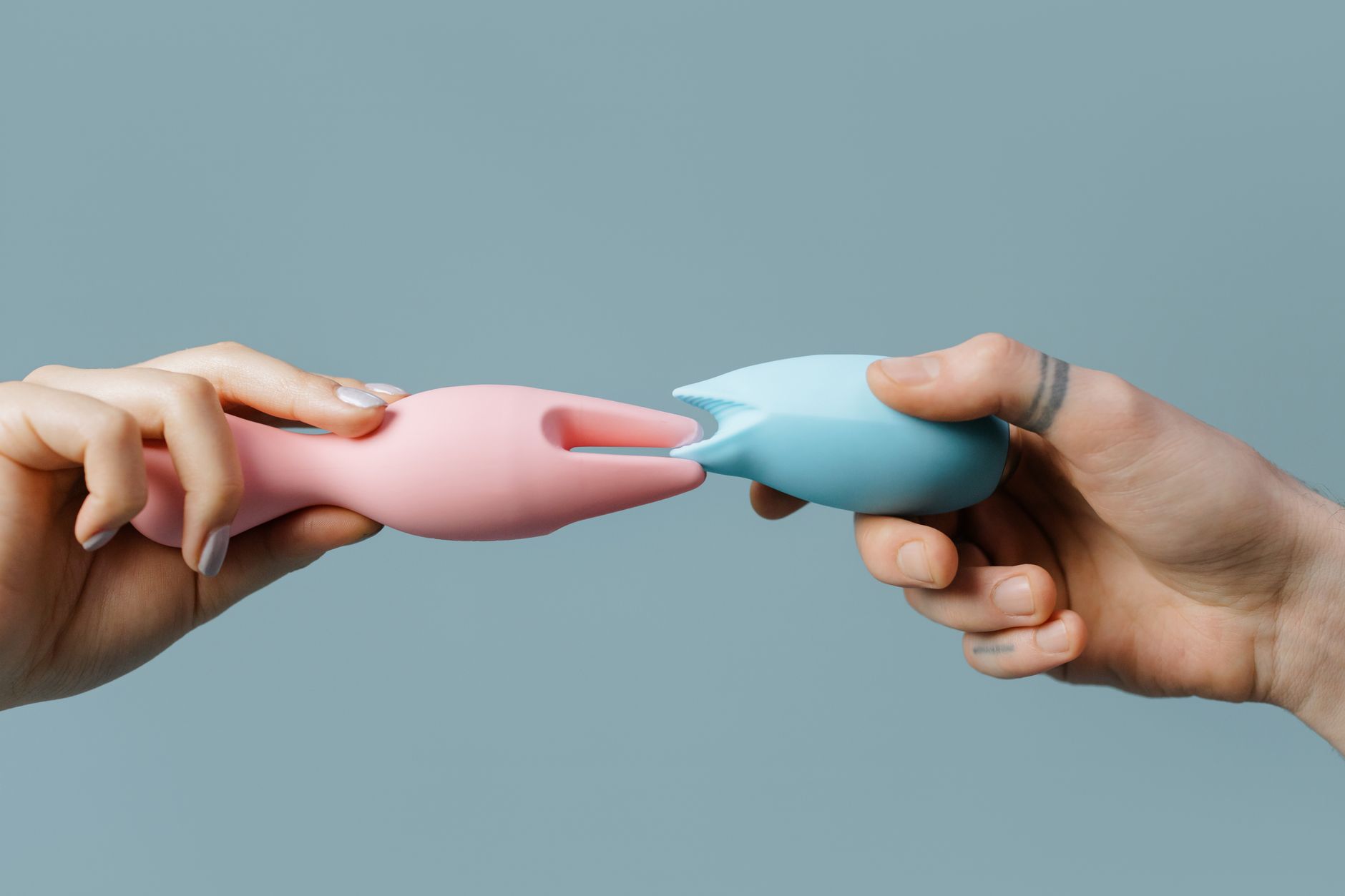
Photo by cottonbro studio on Pexels
How lemon vibrators solve this without compromise
Here's the reframe: a desire mismatch isn't a problem to solve. It's an opportunity to expand what "sex" means for both of you. And lemon clitoral vibrators are the bridge.
Let's walk through three common scenarios.
Scenario one: One partner is ready, the other isn't
Partner A wants to have sex. Partner B needs more time. In most relationships, this ends with either Partner A waiting (and getting frustrated), or Partner B performing (and feeling pressured). Both feel bad.
Instead: Partner A uses a lemon vibrator for clitoral stimulation while Partner B offers touch, kissing, or presence at whatever pace they're comfortable with. Partner A gets to experience pleasure and arousal. Partner B isn't pressuring themselves into readiness they don't feel yet. Often, Partner B becomes aroused by the experience of Partner A's pleasure. Sometimes they don't. Both outcomes are fine.
The lemon sucker's design is particularly good here because it doesn't require penetration. Partner B can stay fully clothed, keep the intensity low, and still be part of the experience without performing arousal they don't feel.
Scenario two: Different orgasm timelines
One partner orgasms quickly. The other takes longer. In heterosexual partnerships, this often looks like: he finishes, she hasn't, and now there's awkwardness.
If you use lemon sexual toys as part of foreplay, the person with a faster orgasm response can have one (or several) before penetration or partnered activity even starts. This removes the time pressure. Then you can focus on the other partner's pleasure without anyone watching the clock.
Alternatively, one partner can use the vibrator during partnered sex. They're not waiting for their body to catch up. They're actively engaged in their own pleasure while being physically connected. That's not a compromise. That's both people winning.
Scenario three: Different desire for frequency
One partner wants sex daily. The other wants it twice a month. This is the mismatch that destroys the most relationships because it feels personal. The person with higher desire feels rejected. The person with lower desire feels pressured.
What often happens: the lower-desire partner avoids physical affection entirely (because touch feels like foreplay and rejection). The higher-desire partner feels starved. Intimacy disappears entirely.
A practical fix: on days when the lower-desire partner isn't interested in full sex, they might be willing to facilitate their partner's pleasure using a lemon vibrator. Not as a chore. As an actual activity they both enjoy. Some couples find that the lower-desire partner discovers they're more interested than they thought once they're actually engaged. Others find they like the intimacy and connection even when they're not interested in sex themselves. And some days, they're just not interested, and that's okay. The relationship doesn't hinge on daily sex.
The emotional piece (this is where it gets real)
Desire mismatches become relational disasters when we treat them as rejection. "They don't want me" becomes the story. "I'm not sexy enough" or "I'm too much" becomes the internal narrative.
When you introduce a tool like a lemon clitoral vibrator into the conversation, you're saying: "Your pleasure matters to me, even when my body isn't ready right now." That's not rejection. That's devotion.
The person with lower desire also gets to feel less guilty. You're not performing. You're genuinely present and engaged, just in a different way. That removes shame from both sides of the equation.
How to actually have this conversation
Don't lead with the vibrator. Lead with curiosity.
"I've noticed our desires don't always line up. I don't think that means we're incompatible. I think it means we need to get creative. Can we talk about what we both need?"
Then listen without defensiveness. The person with higher desire needs to hear: "I do want you. My body just works differently, and that's not about you." The person with lower desire needs to hear: "I don't need you to want sex as often as I do. I need to know we're still connected."
Once you've had that conversation, introducing lemon sexual toys becomes practical, not loaded. "I found something that might help us both feel satisfied. Would you be open to exploring it together?"
Give it time. The first time might feel awkward. The second time less so. By the third or fourth time, it stops being a workaround and becomes just part of how you connect.
What makes lemon vibrators different for couples
Let's be specific about why lemon adult toys work better for this particular problem than other tools.
First, they're not intimidating. They look like what they are. No pretense.
Second, they don't require a partner to do much. Your partner doesn't need to learn new techniques or feel responsible for your orgasm. You're in control of the intensity, speed, and pattern.
Third, they're external. There's no penetration required, which means your partner can stay at whatever comfort level they're at without feeling obligated to participate in that way.
Fourth, the design is actually ergonomic for couples. You can use one while your partner touches you in other ways. You're not fumbling with something that gets in the way.
When this approach isn't enough
If you've tried this and the mismatch is still creating distance, couples therapy is worth considering. Sometimes desire differences are symptoms of larger disconnection. Sometimes there's unresolved hurt or resentment that needs professional support to untangle.
But often, most of the time, the mismatch just needs permission and a practical solution. Lemon vibrators are that solution.
FAQ: Desire Mismatches and Partnered Pleasure
How do I bring up using a vibrator with my partner without making them feel replaced?
Frame it as addition, not substitution. "I want us to find ways to both feel good without pressure on either of us." Lead with your own pleasure needs, not what your partner is failing to do. "I've been thinking about what would help me feel more satisfied" lands differently than "We need to fix our sex life."
What if my partner thinks a vibrator means they're not enough?
This is real insecurity. Don't dismiss it. Say something like: "I want you. My body just works differently sometimes. This lets us both get what we need without anyone feeling resentful." If they're still resistant after hearing you out, that might point to deeper relationship work that's worth doing.
Is it normal for couples to have this big a desire mismatch?
Completely. Research suggests that 80 percent of couples experience some level of sexual desire discrepancy. It's not a sign of incompatibility. It's just biology and psychology being different across two people.
Can using a vibrator together actually make us more intimate?
Yes. Sharing pleasure without performance pressure often rebuilds connection. You're not trying to orgasm. You're trying to feel good together. That's its own kind of intimacy.
What if the mismatch is about different interests, not different frequency?
Same logic applies. One partner wants rough play, the other wants gentle touch. One wants kink, the other finds it weird. You don't have to want identical things. You just need ways for both people to access pleasure. Sometimes that's parallel (you do your thing, I do mine). Sometimes it's complementary.
How long does it take to feel normal using a vibrator as a couple?
Generally three to five times before it stops feeling like you're performing and starts feeling natural. Don't expect it to be seamless immediately.
The point
Desire mismatches don't end relationships. Silence about desire mismatches does. Once you're talking about it and finding solutions together, you've already solved the hardest part. The lemon vibrator is just the practical tool that makes both people's pleasure actually possible. If you'd like support navigating these conversations, we're here to help. Reach out to us at /contact and let's figure out what works for your relationship.