Let's talk about what nobody wants to admit
Penetration hurts. For some of you, it's occasional. For others, it's every time. And the worst part isn't the pain itself. It's the shame that wraps around it, the assumption that your body is broken, or the panic that this is just how sex will be forever.
Here's the truth: penetration pain is incredibly common, it's almost never permanent, and it doesn't mean you have to stop having amazing sex. You just need a different route there.
Why penetration feels painful (and it's rarely what you think)
Penetration discomfort comes from a bunch of different sources, and the fix depends on which one is actually happening. Most people lump all of it under "I'm too tight" or "Something's wrong with me," but that's like saying a car won't start without figuring out if the battery is dead or the fuel pump is broken.
Muscle tension is often the first culprit. When you're anxious about pain, your pelvic floor tightens in anticipation. This creates actual, physical tension that makes penetration harder and more uncomfortable. It's a self-fulfilling prophecy. Fear creates tension, tension creates pain, pain confirms the fear.
Tissue inflammation or sensitivity can also be responsible. Endometriosis, vulvodynia, pelvic inflammatory disease, or even just irritation from an IUD can make the vaginal opening or internal tissue feel raw. Add friction from penetration, and you're working with a system that's already inflamed.
Hormonal shifts matter too. Lower estrogen means thinner vaginal tissue. Lower vaginal pH changes the microbiome. Both of these make tissue more fragile and more prone to irritation. This is why penetration pain often shows up during perimenopause, after breastfeeding, or during certain points in your cycle.
And honestly, sometimes it's just that the angle, speed, or pressure of whatever's happening doesn't work for your particular anatomy. Not everyone's body is built the same way. Some people's angles work better with certain positions. Some need slower starts. Some need more lubrication than others. That's not a flaw. That's just biology.
What lemon vibrators offer that penetration doesn't
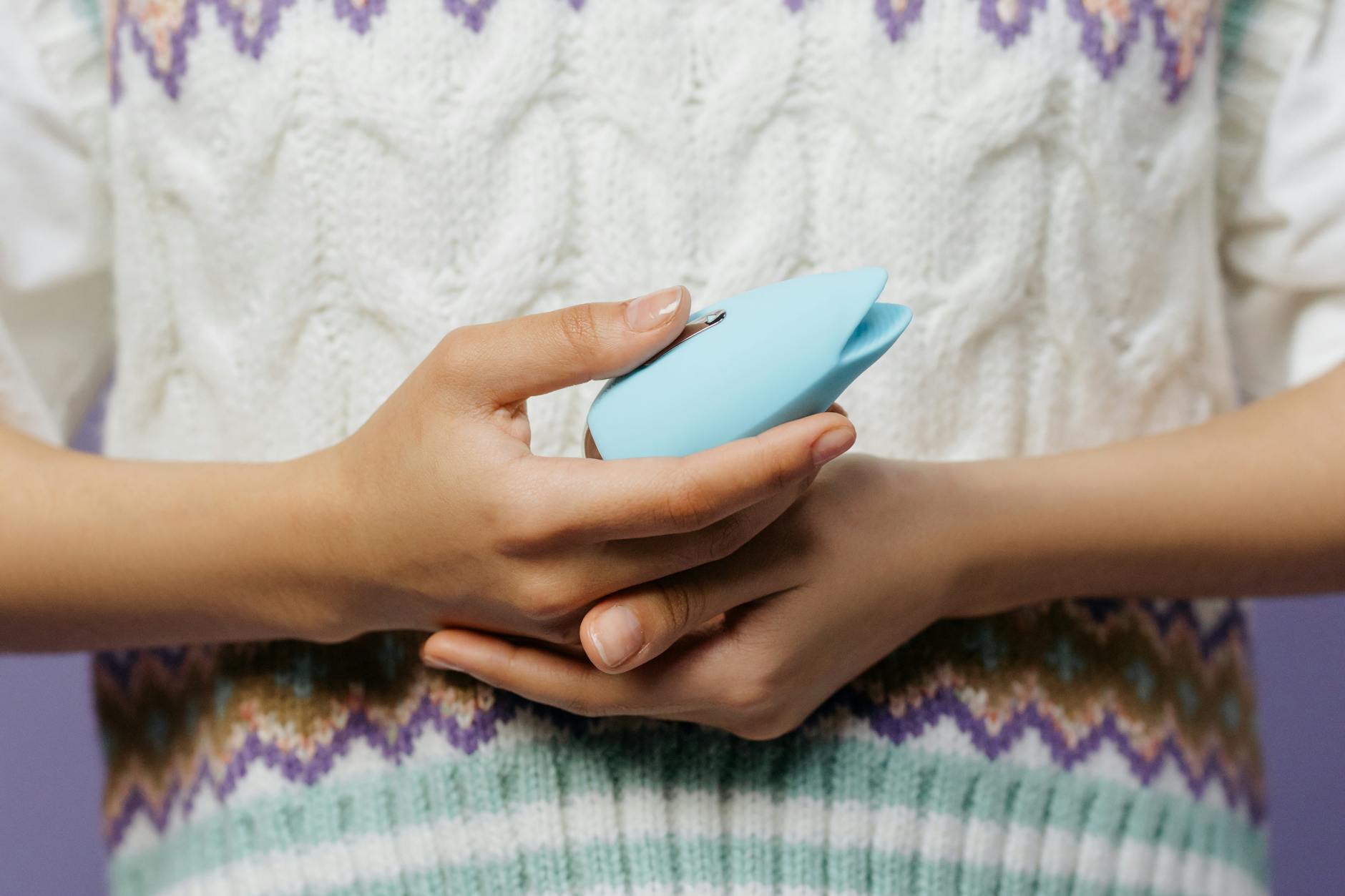
Here's where lemon clitoral vibrators change the conversation. They deliver intense sensation and orgasm without requiring penetration at all.
The clitoral suction technology that lemon vibrators use (sometimes called air-pulse or sonic stimulation) works by creating gentle waves of pressure around the clitoral head and shaft. No friction. No direct grinding. No movement deep inside the body where the pain is happening. It's stimulation that feels powerful without being invasive.
For people with penetration pain, this matters because you get to completely bypass the source of discomfort and go straight to the part of your body that can feel good right now. Your clitoris doesn't know about your pelvic floor tension, your endometriosis, or your hormonal shifts. It knows sensation. It knows pleasure.
You also get control. You choose the pattern. You choose the intensity. You start slow and build up exactly as fast as your nervous system can handle. There's no pressure to be ready before you're ready, no negotiating speed with a partner, no surprises. That sense of safety and agency alone reduces anxiety, which reduces pelvic floor tension, which reduces pain. It's a reverse cycle.
How to use lemon vibrators when penetration is off the table
Three practical things to know.
First, warm up fully. Spend 10-15 minutes on non-penetrative touch before you even think about the toy. Kissing, caressing, whatever gets your blood moving. Your clitoris needs blood flow to respond well, and rushing skips that.
Second, use water-based lubricant anyway. You might think lube is only for penetration, but it helps the toy glide against skin without friction drag, which means less irritation and more pleasure. Don't skip it.
Third, start on the lowest setting. Every pattern on a lemon clitoral vibrator can go shallow or deep depending on where you position it and how much pressure you apply. Start with Pattern 1 or 2, hold it gently against the outside of the clitoris, and let your body tell you when it's ready for more. You can always turn it up. You can't undo overstimulation.
What happens when you remove the pain variable
This is the part that surprises most people. Once the pain stops being a thing, something else opens up. You start to notice what actually feels good. You start to build confidence that your body can still feel pleasure. You start to remember why you wanted this in the first place.
If you have a partner, this changes the dynamic too. Instead of sex being this tense negotiation where someone's in pain and trying to hide it, pleasure becomes the actual goal. That's not a downgrade. That's freedom.
And here's something that matters: using lemon vibrators for clitoral pleasure while penetration is uncomfortable doesn't mean you're settling. It means you're being smart about your body right now. Some of you will eventually be able to have pain-free penetration again (after pelvic floor physical therapy, after hormonal shifts settle, after anxiety treatment, after treatment for endometriosis). Some of you will find that clitoral pleasure is just as good as you thought penetration would be. Both are fine.
When to get professional help
If pain has been happening for more than a few weeks, see someone. Not because you're broken, but because penetration pain is one of the most treatable sexual health issues out there. A pelvic floor physical therapist can teach you how to actually relax those muscles instead of just white-knuckling through. A gynecologist can check for endometriosis, vulvodynia, or other tissue issues. A therapist can help if anxiety is part of the cycle.
These aren't emergency interventions. They're just tools that actually work. Combined with a lemon clitoral vibrator, they're how people go from "sex hurts" to "I'm having good orgasms and feeling connected to my partner."
If you want to start exploring this now, lemon vibrators are the easiest entry point. They're designed to feel gentle, they're intuitive to use, and they work best when you're taking things slow anyway.
Making space for pleasure when your body needs care
Penetration pain often comes with a lot of emotional baggage. Shame, frustration, relationship tension, grief about what you thought sex would be. That's all valid. That's also not something a toy fixes by itself.
But a toy that lets you have pleasure without pain? That helps your nervous system learn that sex can feel good. That helps you rebuild connection with your body. That gives you something to work with while you're figuring out the medical or emotional stuff.
Lemon clitoral vibrators aren't a workaround. They're an actual route to pleasure that works for your body as it is right now. That's enough. That's more than enough.